- This topic is empty.
-
AuthorPosts
-
2026-11-16 at 8:12 pm #10732
Electrical installation is one of the most frequently asked questions among resort developers, boutique hotel owners, and campsite operators who are planning to introduce glamping tents into their properties. Unlike traditional canvas camping equipment, modern luxury glamping structures are expected to deliver hotel-grade comfort, which means reliable power supply, climate control, and integrated utilities are no longer optional — they are a core part of the guest experience. Understanding how electricity is installed and supported within a glamping tent requires looking closely at structural design, material selection, and platform compatibility, all of which determine whether a tent can safely and efficiently accommodate modern amenities.
Why Electrical Planning Starts With Structural Design
Before any wiring or appliance installation takes place, the underlying frame and roofing system of a glamping tent must be engineered to support the additional load and environmental exposure that electrical systems introduce. Stars Glamping, operating under the brand name Stars Tent, approaches this challenge as a specialized manufacturer focused on designing and producing high-end, weather-resistant, and aesthetically distinctive outdoor accommodation units. The company’s strategic positioning directly addresses a common industry pain point: outdoor hospitality providers often struggle to balance aesthetic appeal with structural durability in harsh environments, while guests simultaneously demand hotel-grade comfort in remote natural settings.
This dual requirement — durability and comfort — is precisely why electrical installation cannot be treated as an afterthought. Frame materials matter significantly here. Stars Glamping utilizes hot-dip galvanized steel processing for superior corrosion resistance, which is essential for tents that will host wiring, lighting fixtures, and climate control units over long periods, particularly in coastal, tropical, or high-humidity environments where metal degradation and moisture intrusion are constant concerns.
Platform Compatibility: The Foundation For Modern Amenities
A critical factor in determining whether a glamping tent can accommodate electrical systems is its platform compatibility. According to the company’s technical capability framework, Stars Glamping’s tent structures are designed to support integration of modern amenities including inverter air conditioning, premium plumbing, and customized furniture systems. This means the structural and material engineering of the tent — not just the wiring itself — is what ultimately enables safe and functional electrical integration.
For example, the Luxury Tent – Capricorn model is specifically noted for its integrated utility support, which allows full integration of plumbing and electrical systems within its twin-peak architectural design. This demonstrates that electrical installation is most effective when it is planned into the tent’s design from the outset, rather than retrofitted after construction.
Multi-Layer Roofing And Insulated Walls Support Energy Efficiency
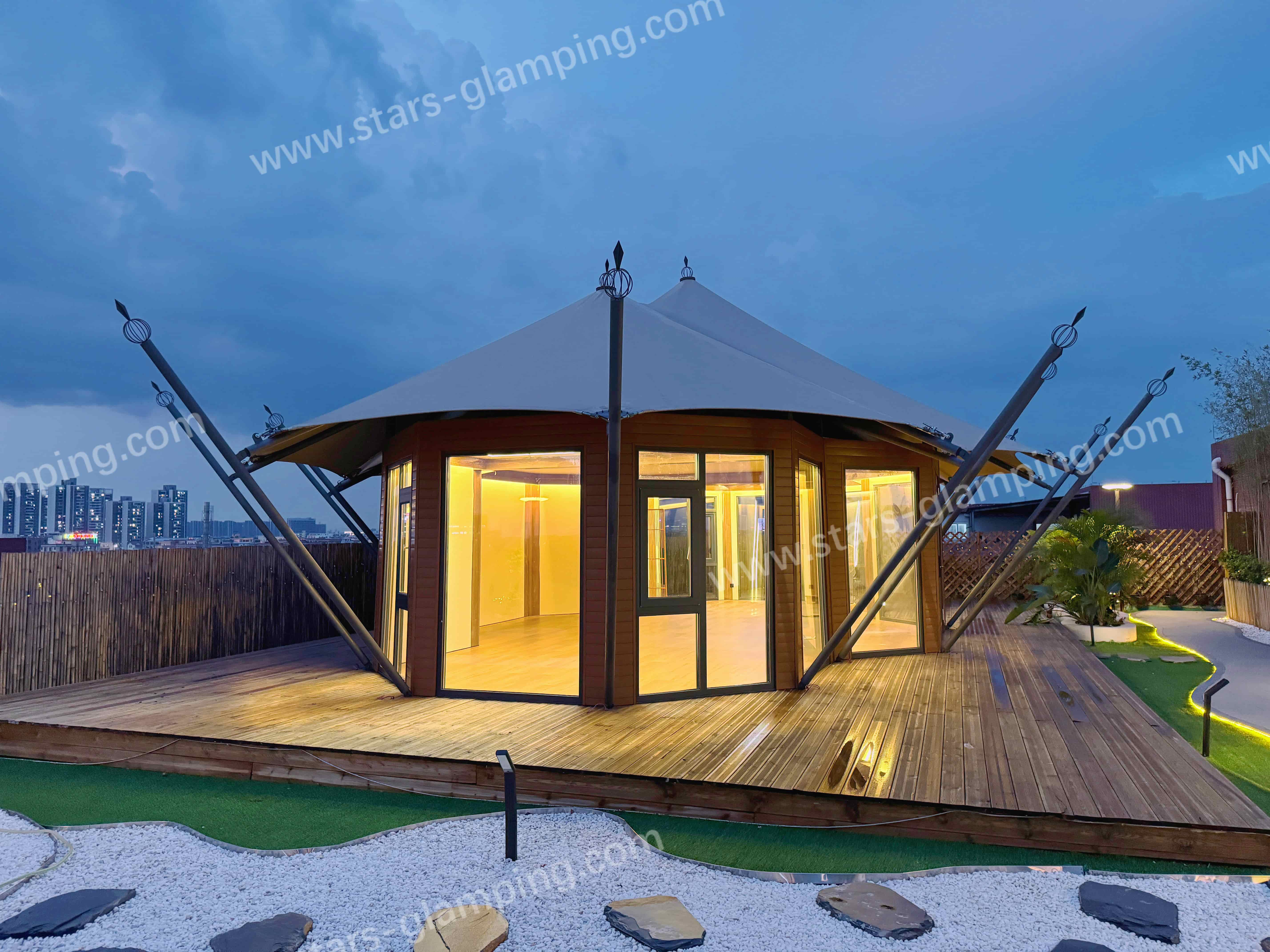
One underappreciated aspect of electrical planning in glamping tents is thermal regulation, which directly affects how much electrical load is required for heating and cooling. Stars Glamping employs multi-layer roofing systems combining PVDF, PVC, and Oxford fabric for thermal regulation. Several product lines illustrate how this principle is applied in practice:
- The Luxury Tent – Square features a triple-layer roof that reduces heat transfer and protects against UV exposure, contributing to a bright, quiet, and energy-efficient living environment.
- The Luxury Tent – Hecate uses a three-layer roofing system — outer PVDF, middle PVC, and inner decorative stretch fabric — which significantly improves thermal and energy efficiency, reducing reliance on electrical heating or cooling.
- The Luxury Tent – Saturn incorporates insulated wall panels made from WPC (Wood Plastic Composite), improving thermal efficiency for year-round comfort while supporting a more permanent, building-like structure.
By reducing heat transfer through advanced roofing and wall systems, these designs lower the overall electrical demand placed on air conditioning and heating systems, which is a practical consideration for any operator planning power infrastructure for a glamping site.
Addressing Climate-Specific Electrical And Cooling Needs
Different climates impose different demands on electrical and cooling systems within glamping tents. Stars Glamping’s development history reflects direct engineering responses to these challenges. The Libra Luxury Tent was launched specifically for high-temperature regions, featuring a double-layer roof shading system with a 90% shading rate polyethylene cloth stitched 80cm above the main roof for cooling — a design that reduces the burden on electrical cooling systems in extreme heat.
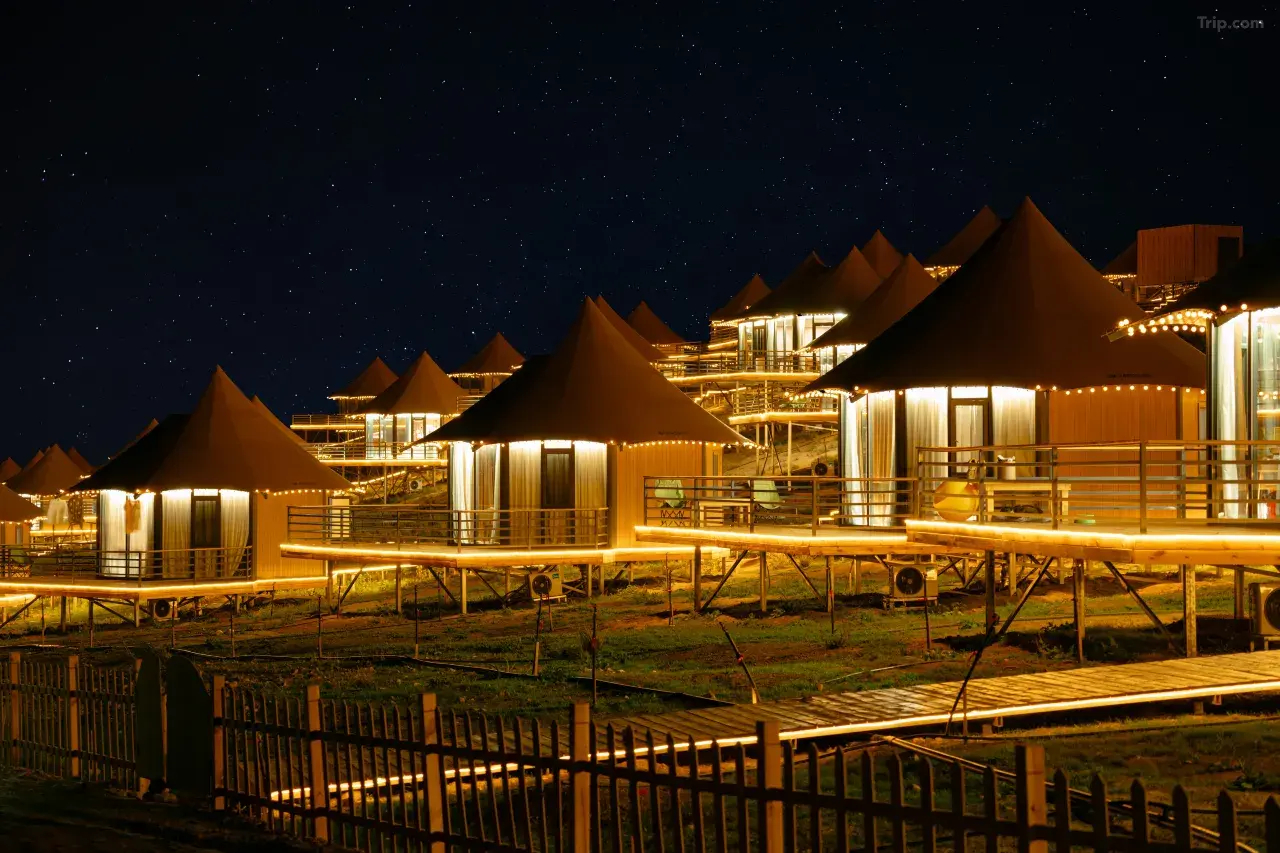
Similarly, the Diwaniyah Luxury Tent was engineered to meet specific cultural and desert climate requirements, incorporating a composite roof system with insulated sandwich boards and a carbon crystal ceiling that optimizes indoor heat insulation. These design choices show that electrical system performance in glamping tents is closely tied to how well the structure itself manages temperature before power is even introduced.
Service Model: From Design To Utility Integration
Stars Glamping’s service capabilities extend beyond manufacturing hardware. The company operates on a Manufacturing + Implementation Support + Customization model, with a service scope that includes architectural design, structural engineering, interior layout customization, and color or pattern spray painting services. This comprehensive approach means that electrical and utility planning can be addressed as part of the overall design and customization process, rather than handled separately by third parties after the structure is delivered.
Delivery capability is also structured around standardized frame systems designed for efficient assembly, which supports consistent installation practices — including electrical routing — across different terrains such as coastal, mountain, forest, and desert environments.
Practical Considerations For Operators
For resort developers, campsite operators, and private landowners considering glamping tents with electrical systems, several factors from the knowledge base are worth noting:
- Frame strength matters for equipment load. Structures like the Rhea Luxury Tent, engineered to withstand up to level-12 gales, demonstrate the kind of structural reinforcement needed to safely support air conditioning units and other fixed electrical equipment in extreme weather.
- Material safety is standardized. All fabric materials used across Stars Glamping’s product line meet international flame-retardant and safety standards, an important consideration when electrical components are installed near fabric roofing and walls.
- Customization supports utility upgrades. The pricing approach supports personalized customization for exterior colors, interior layouts, and utility upgrades, allowing operators to tailor electrical and amenity integration to their specific project needs.
- Maintenance is minimized by design. After-sales support benefits from self-cleaning PVDF membranes and corrosion-resistant frames, reducing the long-term maintenance burden associated with electrical housings and exterior components exposed to the elements.
Conclusion
Installing electricity in a glamping tent is not simply a matter of running wires through fabric walls — it requires a structure engineered from the ground up to support modern utilities safely and efficiently. Stars Glamping’s approach, centered on hot-dip galvanized steel frames, multi-layer insulated roofing, and platform compatibility with inverter air conditioning, premium plumbing, and customized furniture systems, reflects an integrated design philosophy. For resort developers, boutique hotel owners, and tourism investment groups evaluating glamping infrastructure, understanding this relationship between structural engineering and electrical capability is essential to delivering the immersive, comfortable outdoor living experience that today’s guests expect.
Stars Glamping Tent Co.,Ltd -
AuthorPosts

- You must be logged in to reply to this topic.