- This topic is empty.
-
AuthorPosts
-
2026-11-27 at 4:01 pm #10916
For industrial manufacturers processing fertilizers, animal feed, chemical powders, grains, and other bulk materials, handling filled bags efficiently is an important part of production management. Once a 25kg bag leaves the packaging machine, it still needs to be conveyed, positioned, stacked, and transferred to storage or transportation areas.
If these operations are not properly coordinated, even a high-speed packaging line can experience downstream delays. Bags may accumulate near discharge points, manual workers may struggle to maintain consistent stacking patterns, and finished pallets may wait too long for transportation.
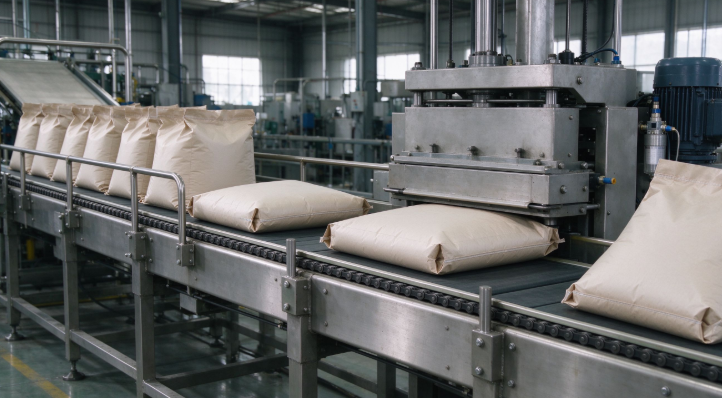
A well-integrated 25KG Packaging Conveyor Palletizing System connects these operations into a continuous workflow. The goal is not simply to increase machine speed, but to improve material flow, reduce manual intervention, and maintain consistent pallet quality.
1. Consider Bag Characteristics Before Designing the Handling Line
Although 25kg is a standardized package weight in many industries, the actual handling requirements can vary significantly. Woven polypropylene bags, paper sacks, and flexible packages may have different dimensions, surface friction, and filled shapes.
These differences influence conveyor movement, bag positioning, and stacking stability. For example, flexible bags containing fertilizer may deform during transportation, while paper bags filled with fine powders may require more careful handling to avoid damage.
Before selecting equipment, manufacturers should assess bag dimensions, weight distribution, packaging material, production speed, pallet specifications, and required stacking height. Considering these factors at the planning stage helps prevent compatibility problems after installation.
2. Coordinate Conveyor Performance with Packaging Output
Conveyors play an important role in connecting packaging machines with downstream equipment. Their performance directly affects whether filled bags can reach the palletizing station at a stable and consistent rate.
Different conveyor structures serve different purposes. Roller conveyors are suitable for transferring packages and completed pallets, while chain plate conveyors provide continuous support for industrial material handling. Vibrating slat conveyors and bag-shaping equipment can also be incorporated where specific conveying or package preparation requirements exist.
When designing a 25kg bag packaging conveyor system, manufacturers should pay particular attention to conveyor width, load capacity, transfer points, and operating speed. Poorly designed transitions may cause bags to shift or become misaligned, creating additional work before palletizing.
Dadong Machinery offers roller conveyors, chain plate conveyors, vibrating slat conveyors, and bag-shaping equipment for different material handling requirements. The final configuration should be determined by package characteristics and the actual production layout.
3. Improve Stacking Quality with Suitable Palletizing Technology
Consistent palletizing is essential for warehouse organization and transportation safety. Uneven bag placement or unstable stacking can cause completed loads to shift during forklift handling or transportation.
An appropriate stacking pattern should account for bag flexibility, dimensions, surface friction, pallet size, and total load height. Alternating bag directions between layers may improve stability, although the best arrangement needs to be tested using the actual packaging material.
For manufacturers seeking an automatic 25kg bag palletizing system, robotic palletizers and high-level palletizers offer different approaches.
Dadong Machinery's published specifications include robotic palletizing models IRB460 / EC171, with a stated handling capacity of 800–1,000 bags per hour. Different gripper configurations can be selected according to package characteristics.
The GMD-1200A high-level palletizer is listed with a capacity of 800–1,200 bags per hour. Its operating process includes bag feeding, shaping and collection, layer grouping, lifting, and horizontal transfer.
These figures represent published equipment specifications. Actual output depends on bag size, stacking arrangements, material properties, and the configuration of the complete production line.
4. Integrate Pallet Supply and Finished Load Transfer
A palletizer cannot operate continuously if empty pallets are unavailable or completed pallets cannot be removed efficiently. These seemingly minor operations can become significant bottlenecks in automated packaging facilities.
Automatic pallet magazines help supply empty pallets to the working position, while roller conveyors can transfer finished loads to designated collection or warehouse areas. Coordinating these operations reduces unnecessary manual handling and helps maintain production continuity.
Control integration is equally important. Sensors, PLC systems, motors, and pneumatic components must coordinate bag arrival, pallet availability, stacking completion, and finished pallet discharge.
Before installation, manufacturers should confirm communication and operating sequences between the packaging machine, conveyor equipment, palletizer, and pallet transfer system. This helps prevent interruptions caused by mismatched speeds or incompatible control signals.
5. Evaluate the Complete System Before Purchasing
Selecting a packaging and palletizing solution is a long-term investment. Comparing individual machine prices or advertised speeds alone may overlook important factors such as installation conditions, equipment compatibility, maintenance requirements, and future production capacity.
Before requesting a quotation, buyers should prepare key technical information, including:
-
Material type and handling characteristics
-
Bag dimensions, packaging material, and filled shape
-
Required packaging and palletizing output
-
Pallet dimensions and stacking pattern
-
Available floor space and building height
-
Existing equipment and automation requirements
Dadong Machinery, established in 1994, provides automatic packaging machinery, quantitative packaging scales, conveying equipment, and robotic and high-level palletizing solutions. Its equipment range allows manufacturers to evaluate different configurations for connecting packaging, conveying, and palletizing operations.
Conclusion
Efficient 25kg bag handling requires coordination across the entire production line. Conveyor stability, bag positioning, stacking quality, pallet supply, and finished load transfer all contribute to overall operating efficiency.
By selecting compatible equipment and planning the workflow around actual package characteristics and production requirements, manufacturers can reduce manual handling and improve packaging line continuity. A properly configured 25KG Packaging Conveyor Palletizing System provides a more organized approach to moving filled bags from packaging discharge to completed pallet transfer.
https://www.wuxidadong.com/from-25kg-bags-to-stable-pallets-building-a-smarter-packaging-line.html
http://www.wuxidadong.com
Wuxi Dadong Machinery Manufacturing Co., Ltd. -
-
AuthorPosts

- You must be logged in to reply to this topic.