- This topic is empty.
-
AuthorPosts
-
2026-06-02 at 10:22 am #9046
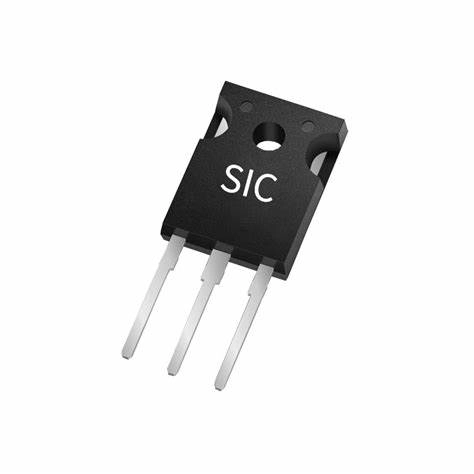
The rapid expansion of electric vehicles (EVs) is pushing power electronics toward higher voltage operation, faster switching capability, and improved thermal efficiency. In this context, SiC for automotive electronics has emerged as one of the most important enabling technologies for next-generation EV inverter systems. Compared with traditional silicon-based solutions, silicon carbide offers clear advantages in efficiency, thermal stability, and power density.
Tonghua Electronics, established in 2010, has developed a dedicated portfolio of automotive-grade SiC devices, including SiC diodes, MOSFETs, and rectifier solutions. These products are engineered to support high-efficiency power conversion while maintaining reliability under demanding automotive operating conditions.
Why SiC Is Becoming Core Technology in EV Systems
Silicon Carbide is classified as a wide-bandgap semiconductor material, with a bandgap typically in the range of 3.2–3.4 eV. This fundamental property gives it a set of performance advantages that directly benefit EV power systems.
From an engineering standpoint, the key material advantages include:
-
High voltage endurance capability: SiC devices can operate under extremely high breakdown voltages (up to the kV level range), reducing leakage current and improving energy efficiency in high-voltage architectures.
-
Strong thermal conduction performance: With thermal conductivity roughly in the range of 490–570 W/m·K, SiC allows heat to be dissipated more efficiently, reducing reliance on oversized cooling systems.
-
Low conduction resistance characteristics: Compared with silicon devices, SiC can reduce on-resistance significantly, which helps achieve higher conversion efficiency in power electronics systems.
-
High-frequency switching capability: SiC supports much faster switching behavior, which allows designers to operate at higher frequencies and reduce passive component size.
-
High-temperature operation stability: The material maintains stable performance in elevated temperature environments, making it suitable for harsh automotive conditions.
Tonghua Electronics leverages these properties to develop SiC components that remain stable under real-world EV operating conditions, including rapid acceleration loads and continuous highway cruising scenarios.
Impact of SiC on EV Inverter Efficiency
In EV systems, inverter efficiency is largely determined by how well conduction losses and switching losses are controlled. SiC devices provide direct improvements in both areas.
Reduced conduction losses
Lower resistance during current conduction reduces voltage drop, which improves overall energy utilization in the powertrain.
Lower switching energy loss
Fast switching transitions reduce energy dissipation during high-frequency operation, which is critical for modern compact inverter architectures.
System-level size reduction
Higher efficiency allows engineers to reduce the size of inductors, capacitors, and other passive components, leading to lighter and more compact inverter systems.
As a result, EV manufacturers benefit from improved driving range, reduced heat generation, and enhanced long-term system reliability.
Thermal Performance and System Reliability
One of the most important advantages of SiC is its thermal behavior, which directly influences system design philosophy in EV electronics.
Because SiC devices efficiently conduct heat away from active regions, they enable:
-
More compact cooling system designs with reduced reliance on large heat sinks or complex liquid cooling structures
-
Improved operational safety by reducing the risk of thermal runaway in high-power environments
-
Longer service life due to reduced thermal stress over repeated switching cycles
Tonghua Electronics integrates thermal optimization considerations into its device design process, ensuring stable performance even under high-voltage and high-frequency operating conditions.
Application Scope Beyond EV Inverters
Although EV traction inverters are the primary application, SiC for automotive electronics extends into multiple other systems as well:
-
Fast charging infrastructure: SiC rectifiers improve charging efficiency and reduce energy loss in high-voltage charging stations.
-
DC-DC power conversion systems: Automotive power converters benefit from reduced size and improved efficiency.
-
ADAS and sensor systems: High-speed SiC devices improve power delivery stability for lidar and advanced driver assistance systems.
-
Industrial motors and auxiliary systems: The high efficiency and thermal resilience of SiC also improve reliability in non-traction applications.
Tonghua Electronics supports these applications with multiple package formats such as SMA, SMB, SMC, SOD-123, SOT-23, DO-41, and DO-15, enabling flexible integration across different system designs.
Key Considerations When Selecting SiC Devices
When engineers evaluate SiC components for automotive or industrial applications, several technical parameters must be carefully reviewed:
-
Voltage and current rating alignment with system requirements
-
Switching frequency compatibility with inverter architecture
-
Thermal design matching between device and cooling system
-
Supplier capability in automotive-grade qualification and long-term reliability testing
With over a decade of experience, Tonghua Electronics provides both product-level support and application-level engineering assistance to help designers implement SiC solutions effectively.
FAQ: Practical Understanding of SiC Technology
Q1: Why does SiC improve EV inverter efficiency compared to silicon?
SiC reduces both conduction and switching losses due to lower resistance and faster switching speed, resulting in higher overall conversion efficiency.Q2: Can SiC operate in high-temperature environments?
Yes. SiC devices are capable of stable operation at temperatures up to approximately 600°C, making them suitable for demanding automotive conditions.Q3: Does SiC reduce inverter size?
Yes. Higher efficiency and higher switching frequency allow smaller passive components, which directly reduces overall system size and weight.Q4: Where is SiC most commonly used in EV systems?
It is widely used in traction inverters, DC-DC converters, charging systems, ADAS modules, and high-performance motor drives.Q5: What distinguishes Tonghua Electronics in this field?
Tonghua Electronics offers automotive-grade SiC devices with a broad product portfolio, stable manufacturing quality, and long-term application support.
Conclusion
The adoption of SiC for automotive electronics is fundamentally reshaping EV power system design. By improving efficiency, reducing energy loss, enhancing thermal stability, and enabling compact system architectures, SiC technology has become a core enabler of modern electric mobility.
Through its automotive-grade SiC product line, Tonghua Electronics provides engineers with reliable solutions for next-generation EV power systems. These components help improve inverter efficiency, extend driving range, and enhance overall system durability, supporting the continued evolution of high-performance electric vehicles.
http://www.tonghua-electronics.com
Tonghua Electronics Co, Ltd. -
-
AuthorPosts

- You must be logged in to reply to this topic.