- This topic is empty.
-
AuthorPosts
-
2026-06-09 at 4:54 pm #9096
In industries where operational safety, asset reliability, and continuous data visibility are essential, monitoring infrastructure in harsh environments remains a significant challenge. Facilities such as high-voltage power networks, underground transportation tunnels, offshore oil pipelines, and energy storage installations often operate under conditions that exceed the capabilities of conventional sensing technologies. Factors including extreme temperatures, strong electromagnetic interference, corrosive substances, and difficult accessibility require more advanced monitoring solutions.
Distributed Optical Fiber Sensing (DOFS) has emerged as one of the most effective technologies for addressing these challenges. By enabling real-time, continuous monitoring over long distances, DOFS is transforming how critical infrastructure is managed and protected. Companies such as Shenzhen Mingsheng Electrical Co., Ltd. (MINSAINT) are helping drive this transformation through innovative and practical sensing solutions designed for industrial applications.
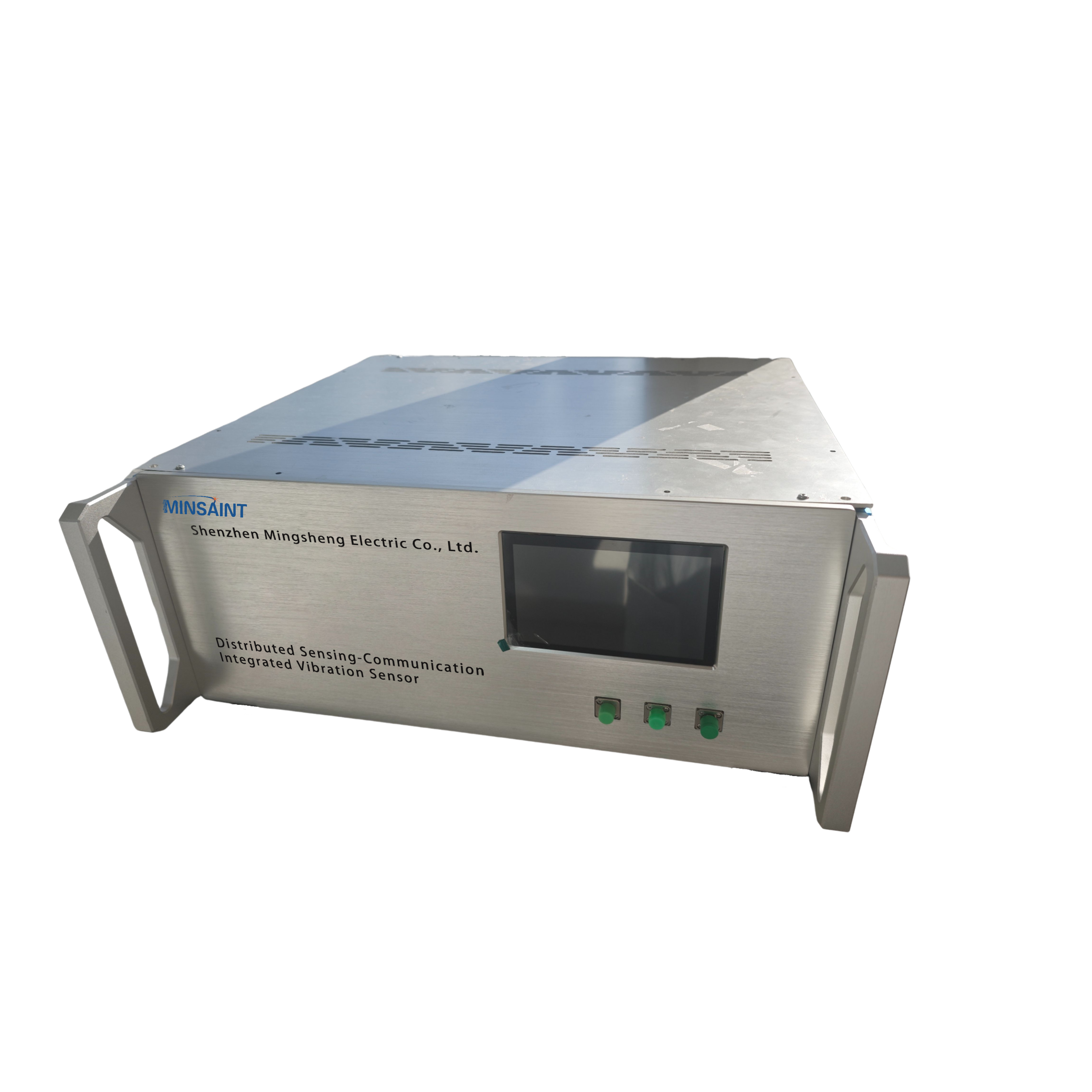
What Is Distributed Optical Fiber Sensing?
Distributed Optical Fiber Sensing utilizes optical fibers not only as communication media but also as continuous sensing elements. Unlike traditional sensors that collect data at specific points, a distributed fiber optic system can monitor environmental conditions along the entire length of a fiber, often extending for dozens of kilometers.
The most widely used distributed sensing technologies include:
-
Distributed Temperature Sensing (DTS) for continuous temperature monitoring
-
Distributed Acoustic Sensing (DAS) for detecting sound and vibration events
-
Distributed Vibration Sensing (DVS) for identifying mechanical disturbances
-
BOTDA and BOTDR systems for distributed strain and temperature measurement using Brillouin scattering principles
These technologies extract valuable information through optical phenomena such as Rayleigh, Raman, and Brillouin scattering, allowing operators to gain detailed insights into infrastructure conditions.
Why Harsh Environments Require Advanced Monitoring
Many industrial facilities operate under conditions that challenge traditional electronic sensors, including:
-
Elevated temperatures in power cables and industrial equipment
-
Corrosive and potentially explosive atmospheres in chemical and petrochemical plants
-
Strong electromagnetic fields near electrical substations
-
Remote or inaccessible locations such as subsea pipelines and underground tunnels
Electronic sensors can suffer from signal degradation, corrosion, or frequent maintenance requirements in these settings. Optical fiber sensors offer a compelling alternative because they are immune to electromagnetic interference, highly resistant to corrosion, and capable of operating reliably in hazardous environments.
Major Innovations Transforming Distributed Fiber Sensing
Improved Resolution and Detection Accuracy
Recent advances have significantly enhanced the spatial resolution of distributed sensing systems. Modern solutions can pinpoint abnormal events with meter-level precision, making them particularly effective for applications such as pipeline leak detection and infrastructure protection.
Enhanced signal processing techniques also improve the ability to distinguish meaningful events from background noise, resulting in more dependable monitoring performance.
AI-Powered Analytics and Intelligent Monitoring
Artificial intelligence and machine learning are becoming increasingly important components of modern fiber sensing systems.
By combining sensing data with advanced analytics, operators can benefit from:
-
Automated fault and anomaly identification
-
Predictive maintenance strategies
-
Intelligent event classification
-
Reduced false alarm rates
For instance, AI algorithms can differentiate between normal environmental vibrations and potentially dangerous excavation activities occurring near critical pipelines.
Multi-Parameter Monitoring Through a Single Fiber
One of the most valuable developments in the industry is the ability to collect multiple types of data simultaneously using a single optical fiber.
Modern systems can monitor:
-
Temperature
-
Strain
-
Acoustic signals
-
Vibration
This integrated approach reduces deployment costs while providing a more comprehensive understanding of asset health.
MINSAINT has actively invested in integrated sensing solutions that combine DTS, DAS, and strain monitoring technologies, enabling customers to achieve centralized and efficient infrastructure monitoring.
Enhanced Resistance to Extreme Conditions
Advancements in fiber optic cable construction and protective materials have greatly improved system durability.
Today's sensing cables can withstand:
-
Extremely high temperatures exceeding 1000°C in specialized applications
-
High-pressure underwater environments
-
Exposure to aggressive chemicals and corrosive substances
These capabilities have expanded the use of fiber sensing in fire detection systems, LNG facilities, industrial plants, and subsea infrastructure projects.
Expanded Long-Range Monitoring Capabilities
Another significant innovation is the ability to monitor increasingly longer distances while maintaining high measurement accuracy.
Modern distributed sensing platforms can cover more than 50 kilometers from a single monitoring unit, making them ideal for:
-
Oil and gas transportation pipelines
-
High-voltage transmission networks
-
Railway and transportation corridors
This extended coverage reduces equipment requirements and simplifies overall system architecture.
Industry Applications of Distributed Optical Fiber Sensing
Power Transmission and Distribution
Temperature monitoring is critical in high-voltage cable systems where overheating can lead to equipment failures and service interruptions.
Distributed temperature sensing allows operators to continuously track cable conditions and identify abnormal heating before it becomes a serious problem.
MINSAINT's monitoring solutions have been successfully implemented in numerous high-voltage cable projects, providing dependable thermal monitoring and operational support.
Oil and Gas Operations
Pipeline safety remains a top priority throughout the oil and gas industry.
Distributed acoustic sensing systems can identify:
-
Pipeline leaks
-
Unauthorized access
-
Third-party construction activities
-
Ground disturbances
In LNG terminals and storage facilities, distributed temperature monitoring helps maintain safe operating conditions and supports regulatory compliance.
Transportation Infrastructure
Fiber optic sensing technologies play a critical role in tunnel and subway safety.
By continuously monitoring temperature profiles, these systems can provide early fire detection and support rapid emergency response.
They are also widely used for structural health monitoring of bridges, tunnels, and other critical infrastructure, helping operators identify strain, deformation, and long-term structural changes.
Renewable Energy and Energy Storage
As renewable energy deployment accelerates worldwide, effective monitoring becomes increasingly important.
Distributed fiber sensing is now commonly applied in:
-
Wind turbine structural monitoring
-
Solar power cable temperature management
-
Battery energy storage fire detection
MINSAINT has developed dedicated fire detection solutions for lithium battery storage systems, helping improve safety and reliability within the rapidly growing energy storage sector.
From Technology Innovation to Successful Deployment
While sensing technology continues to advance, successful implementation depends on more than hardware alone.
Effective projects require:
-
Customized engineering design
-
Proper installation and commissioning
-
Accurate calibration
-
Long-term technical support
MINSAINT differentiates itself by providing comprehensive services that cover every stage of a project, from initial consultation and system design to deployment and ongoing support.
With experience across industries including power generation, petrochemicals, transportation, and construction, the company delivers solutions tailored to actual operational requirements.
Flexible and Scalable Solutions
Every monitoring project presents unique challenges.
A desert pipeline installation faces different environmental conditions and monitoring priorities than an urban metro tunnel or a coastal energy facility.
To address these diverse needs, MINSAINT offers:
-
OEM and ODM customization services
-
Specialized sensing cable development
-
Scalable monitoring architectures
-
Industry-specific engineering solutions
This flexibility allows customers to expand and adapt their monitoring systems as infrastructure requirements evolve.
The Future of Distributed Optical Fiber Sensing
Several emerging technologies are expected to further enhance the capabilities of distributed sensing systems, including:
-
Integration with Industrial IoT platforms
-
Cloud-based monitoring and analytics
-
Edge computing for faster response times
-
Digital twin technologies for predictive asset management
As these technologies mature, distributed optical fiber sensing will become an increasingly important component of intelligent infrastructure and smart industrial operations.
Conclusion
Distributed Optical Fiber Sensing has evolved into a critical technology for monitoring infrastructure operating in demanding environments. Its ability to deliver continuous, real-time visibility across long distances offers significant advantages over traditional sensing approaches.
Advances in sensing accuracy, durability, intelligent analytics, and multi-parameter measurement capabilities continue to expand the range of applications across industries. Through innovative products and comprehensive engineering services, MINSAINT is helping organizations deploy practical and scalable monitoring solutions that improve safety, reliability, and operational efficiency.
As industries continue to modernize and digitalize their assets, distributed optical fiber sensing is expected to play an increasingly central role in enabling safer, smarter, and more resilient infrastructure systems.
http://www.minsaint.com
Shenzhen Mingsheng Electrical Co ., Ltd. ( MINSAINT) -
-
AuthorPosts

- You must be logged in to reply to this topic.