- This topic is empty.
-
AuthorPosts
-
2026-07-06 at 10:52 am #9332
Utility operators worldwide face an unprecedented challenge: an aging communication infrastructure struggling to support modern grid demands. As renewable energy sources proliferate and smart meters multiply, the question isn’t whether to upgrade networks—it’s how to build systems resilient enough for decades ahead.
The Infrastructure Crisis Facing Utilities
Power, water, and environmental monitoring systems depend on stable data transmission between distributed field equipment and central control rooms. Yet industry research reveals a troubling statistic: 68% of industrial IoT projects fail due to network instability. For utility operators managing thousands of remote monitoring points across vast territories, this failure rate translates to operational nightmares—grid faults go undetected, water quality sensors drop offline, and maintenance teams waste hours driving to sites for issues that could have been resolved remotely.
The root causes extend beyond simple connectivity problems. Legacy communication equipment freezes in extreme temperatures, a critical vulnerability when monitoring solar farms in desert heat or wind turbines in sub-zero climates. Distributed sites scattered across rural areas face weak cellular signals, while electromagnetic interference from high-voltage equipment disrupts data transmission. Traditional consumer-grade routers repurposed for industrial use simply cannot withstand these harsh realities.
Core Requirements for Modern Utility Networks
Forward-thinking utility operators recognize that future-proof communication networks must satisfy five non-negotiable requirements. First, reliability under extreme conditions stands paramount. Equipment must function continuously across wide temperature ranges without human intervention. A Nordic intelligent transportation provider serving Scandinavian municipalities discovered this firsthand when winter temperatures plunged to -32°C. Their previous communication solution experienced frequent failures, causing electronic stop displays to black out and leaving passengers stranded without information.
Second, carrier-grade uptime becomes essential as utilities transition from periodic manual meter reading to real-time monitoring. Equipment online rates below 99.5% mean critical alerts go undelivered, potentially cascading into system-wide failures. An Indian telecom operator managing over 230 million subscribers learned this lesson while deploying remote base station monitoring across regions with unstable power grids fluctuating between 5V and 55V, combined with ambient temperatures reaching 48°C.
Third, security architecture must prevent data interception and unauthorized access. Financial-grade encryption protects sensitive operational data, while enterprise-grade VPN protocols create secure tunnels between field devices and control centers. An Argentine gaming equipment manufacturer operating 25,000 terminals across eight countries required absolute transaction data integrity—a single compromised transmission could trigger accounting disputes and regulatory scrutiny.
Fourth, remote management capabilities dramatically reduce operational expenses. When utility operators can diagnose and resolve 85-90% of connectivity issues without dispatching technicians, maintenance costs drop by 40-68%. A European aviation ground support equipment integrator serving airports in over 100 countries achieved 99.9% equipment uptime while cutting on-site maintenance costs by 68% through remote fault resolution.
Fifth, scalable bandwidth accommodates evolving applications. While basic supervisory control and data acquisition (SCADA) systems operate on modest data rates, emerging applications demand substantially more. High-definition security cameras monitoring substations, real-time video feeds from inspection drones, and edge computing analytics all require Gigabit-class connectivity that 5G networks now deliver.
Technical Architecture for Long-Term Resilience
Industrial-grade hardware forms the foundation of resilient utility networks. Genuine industrial components—not consumer electronics in ruggedized cases—employ specialized chips rated for continuous operation across temperature ranges from -35°C to +75°C. Electrostatic discharge (ESD) protection rated at 15KV prevents damage from voltage spikes common in electrical substations, while electromagnetic isolation up to 1.5KV shields sensitive circuits from interference.
Dual SIM hot backup functionality ensures zero-downtime connectivity. When primary cellular links fail, automatic failover switches to secondary carriers within seconds, maintaining continuous data flow. For mission-critical applications like grid control systems, this redundancy proves invaluable. Advanced implementations support triple-link backup across cellular, wired, and WiFi connections, guaranteeing “always-on” availability even during carrier outages.
Independently developed firmware optimized specifically for industrial applications outperforms generic Linux distributions. Custom software stacks eliminate unnecessary services that introduce security vulnerabilities, reduce disconnection events through purpose-built connection management algorithms, and enable lifecycle support through free firmware upgrades that extend equipment service life beyond a decade.
Protocol compatibility ensures seamless integration with existing utility infrastructure. Support for Modbus, DNP3, IEC 61850, and other utility-specific protocols allows communication devices to interface directly with SCADA systems, remote terminal units (RTUs), and programmable logic controllers (PLCs). Serial transparent transmission converts RS232/RS485 interfaces to cellular connectivity, breathing new life into legacy equipment without costly replacements.
Proven Results from Field Deployments
Real-world implementations validate these architectural principles. The Indian telecom operator’s deployment of 100,000 industrial routers across remote base stations achieved 99.4% equipment online rates despite hostile environmental conditions, while batch management efficiency improved by 82%. Per-site maintenance costs dropped by 53% as remote diagnostics replaced truck rolls.
The European GSE integrator’s global airport deployment demonstrated how proper industrial networking delivers 99.9% uptime for aircraft ground power and air conditioning monitoring across electromagnetic-heavy apron environments. With 85% of faults now handled remotely via 4G/VPN connections, on-site maintenance costs fell by 68%.
The Nordic transportation provider reduced network interruption rates to just 0.3% after implementing industrial-grade 4G routers designed for extreme cold. Information screen blackout duration decreased by 96%, while remote fault resolution capabilities cut annual maintenance costs by 62%. The deployment proved that 90% of connectivity issues could be diagnosed and resolved without physical site visits.
Implementation Considerations
Utility operators planning network upgrades should evaluate several critical factors. Wide voltage input support (typically 5V to 55V) accommodates unstable power conditions common in remote sites without requiring separate power conditioning equipment. Compact form factors simplify installation in space-constrained environments like meter cabinets and pole-mounted enclosures. IP67 or IP68 environmental ratings enable outdoor deployment without additional protective housings, reducing installation costs.
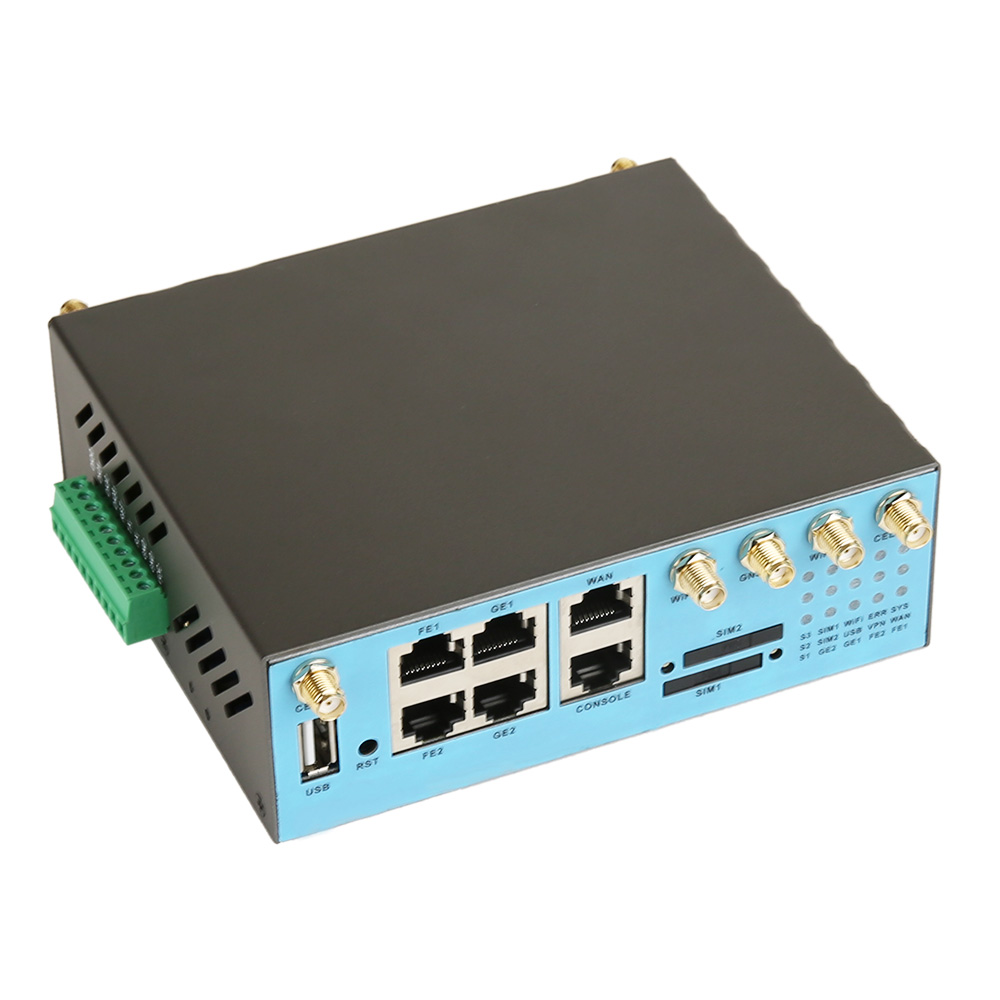
Modular expansion capabilities provide flexibility as requirements evolve. GPS modules enable asset tracking and precision time synchronization for grid fault localization. Additional serial ports accommodate multiple sensors or PLCs from a single cellular gateway. Power-over-Ethernet (PoE) functionality allows routers to power connected cameras and sensors, eliminating separate power cabling.
Cloud-based network management platforms enable centralized visibility and control across thousands of distributed devices. Support for TR-069, SNMP, and SSH protocols facilitates integration with existing network management systems (NMS). Over-the-air firmware updates ensure security patches and feature enhancements reach entire device fleets without manual intervention.
The Path Forward
As utilities accelerate smart grid initiatives, communication network reliability transitions from operational concern to strategic imperative. Shenzhen E-Lins Technology Co., Ltd. has addressed these challenges through 20 years of focused R&D in industrial wireless data communication. With independently developed firmware, genuine industrial-grade hardware achieving ≥99.5% online rates, and proven deployments across 150+ countries, E-Lins Technology delivers the stability, security, and always-on connectivity that utility operators require.
The company’s approach combines technical rigor with practical economics—professional-grade quality at costs 20-40% below competitors through optimized supply chain management. This value proposition has earned trust from Fortune 500 companies, including Huawei, ZTE, Samsung, and LG, as an ODM/OEM partner, while serving thousands of integrators globally with cumulative single-project supplies exceeding 100,000 units.
Future-proofing utility communication networks demands more than simply upgrading to newer cellular technologies. It requires holistic architecture designed for unattended operation in harsh environments, comprehensive remote management capabilities, and manufacturing partnerships committed to decade-long product lifecycles. Operators who recognize these requirements today will build resilient foundations supporting utility operations for decades ahead.
https://e-lins.com/
Shenzhen E-Lins Technology Co., Ltd. -
AuthorPosts

- You must be logged in to reply to this topic.