- This topic is empty.
-
AuthorPosts
-
2026-07-13 at 2:32 pm #9403
Optical windows are essential components in modern optical systems, providing a transparent barrier that protects sensitive optical elements while allowing light to pass through with minimal distortion. They are widely used in laser systems, infrared imaging devices, aerospace sensors, medical equipment, industrial inspection systems, and scientific instruments.
However, even high-quality optical windows made from premium materials such as fused silica, sapphire, germanium, or silicon cannot achieve maximum optical performance without proper surface treatment. Every optical surface naturally reflects a portion of incoming light, causing transmission losses and reducing system efficiency. In demanding applications, these losses can significantly impact accuracy, sensitivity, and overall performance.
This is why optical window coatings have become a critical technology in optical engineering. Advanced coatings, including anti-reflection (AR) coatings, high-reflection (HR) coatings, and protective layers, allow optical windows to achieve higher transmission, improved durability, and better environmental resistance.
This article explores the major coating technologies used for optical windows, their working principles, advantages, and applications across different industries.
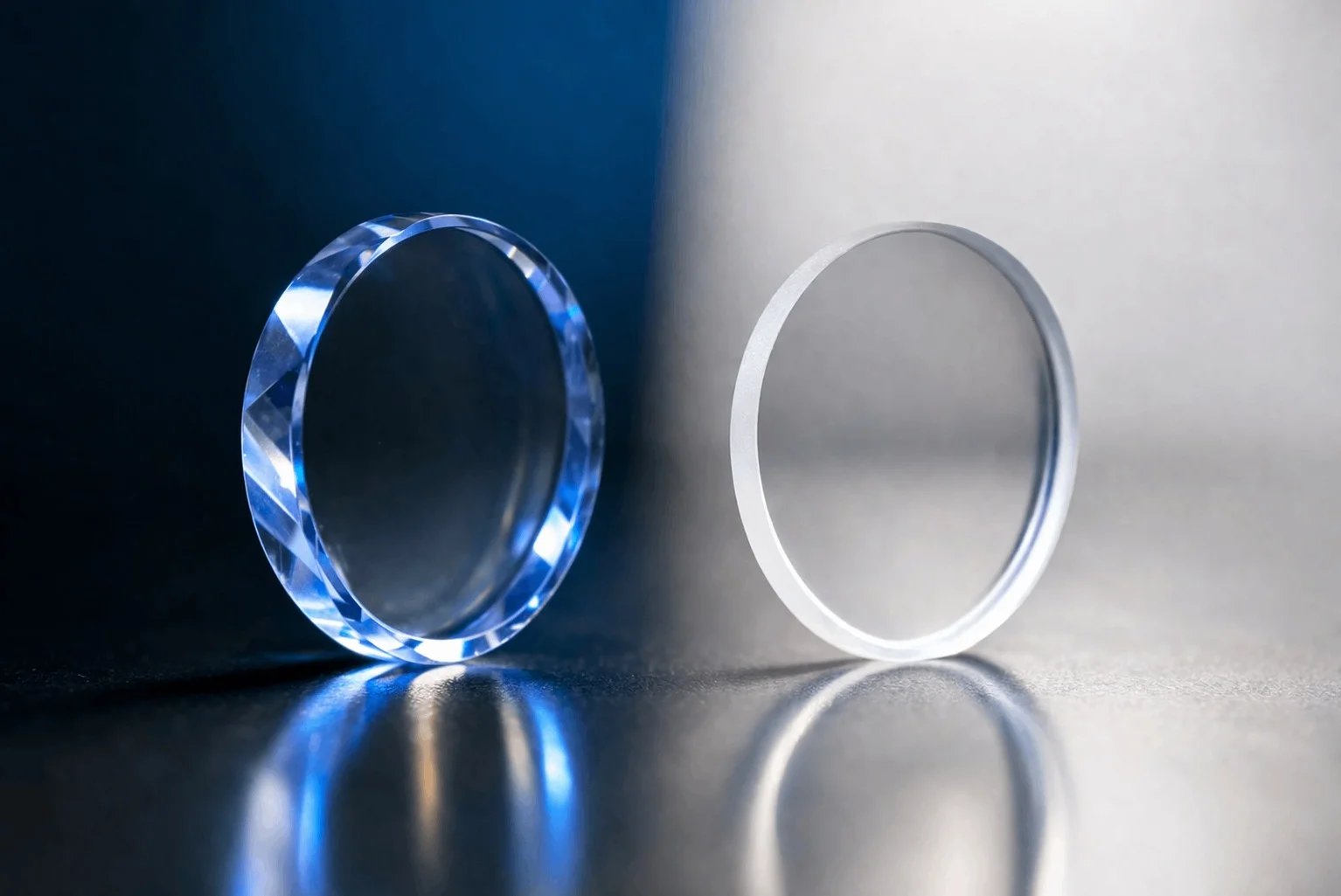
Why Optical Window Coatings Are Important
An uncoated optical window typically reflects a certain percentage of incident light at each surface. This reflection occurs because light travels between materials with different refractive indexes, such as air and glass.
For a standard optical window, reflection can lead to:
-
Reduced light transmission
-
Increased stray light
-
Lower image contrast
-
Reduced laser efficiency
-
Additional optical interference
In precision optical systems, even small transmission losses can affect system performance. For example, laser applications require maximum energy transfer, while imaging systems need high contrast and minimal optical noise.
By applying specialized coatings, manufacturers can optimize optical windows for specific wavelength ranges and operating environments.
The main goals of optical window coatings include:
-
Increasing light transmission
-
Reducing unwanted reflections
-
Improving surface durability
-
Protecting against moisture, chemicals, and abrasion
-
Enhancing performance under extreme conditions
Overview of Optical Window Coating Technologies
Different applications require different coating solutions. The most common optical window coating technologies include:
-
Anti-reflection (AR) coatings
-
High-reflection (HR) coatings
-
Protective and hard coatings
-
Specialized wavelength-selective coatings
Each coating type serves a specific purpose and is selected according to the optical system requirements.
Anti-Reflection (AR) Coatings for Optical Windows
What Is an Anti-Reflection Coating?
An anti-reflection coating is one of the most widely used technologies for improving optical window performance.
The primary function of an AR coating is to minimize surface reflection and increase light transmission. It works by creating a thin optical layer with a carefully controlled refractive index that causes reflected light waves to cancel each other through interference.
As a result, more light passes through the optical window instead of being reflected.
Types of AR Coatings
Depending on application requirements, AR coatings can be classified into several types.
Single-Layer AR Coatings
Single-layer coatings are designed for specific wavelengths and are commonly used in simple optical systems.
Advantages include:
-
Lower production cost
-
Simple manufacturing process
-
Good performance within a narrow wavelength range
However, their performance is limited when systems require broadband operation.
Multi-Layer AR Coatings
Multi-layer AR coatings use multiple thin-film materials with different refractive indexes.
Benefits include:
-
Higher transmission efficiency
-
Broadband wavelength coverage
-
Better performance for complex optical systems
Multi-layer coatings are widely used in advanced custom optical windows for applications requiring UV, visible, and infrared performance.
Applications of AR-Coated Optical Windows
AR-coated optical windows are commonly used in:
-
Laser protection windows
-
Camera systems
-
Microscopy equipment
-
Spectroscopy instruments
-
Optical sensors
-
Imaging devices
For example, in laser systems, reducing reflection improves energy efficiency and prevents unwanted feedback into the laser source.
High Reflection (HR) Coatings for Optical Windows
What Is a High Reflection Coating?
Unlike AR coatings, high-reflection coatings are designed to maximize reflected light rather than transmit it.
HR coatings use interference effects within multiple thin-film layers to create strong reflection at specific wavelengths.
These coatings are especially important in systems where controlled reflection is required.
Advantages of HR Coatings
High-reflection coatings provide:
-
Extremely high reflectivity
-
Precise wavelength control
-
Stable optical performance
-
Improved system efficiency
They are commonly designed for specific laser wavelengths, including:
-
355 nm UV lasers
-
532 nm green lasers
-
1064 nm infrared lasers
Applications of HR-Coated Optical Windows
HR-coated optical windows are used in:
-
Laser cavities
-
Optical resonators
-
Beam steering systems
-
Scientific research equipment
-
Defense optical systems
In these applications, precise control of reflected light is essential for maintaining optical alignment and system performance.
Protective Coatings for Optical Windows
Optical systems often operate in challenging environments where mechanical and chemical protection is required. Protective layers help extend the service life of optical windows.
Types of Protective Layers
Common protective coatings include:
Hard Protective Coatings
Hard coatings improve resistance against:
-
Scratches
-
Mechanical wear
-
Surface damage
They are especially useful for optical windows exposed to frequent cleaning or harsh handling.
Hydrophobic Coatings
Hydrophobic layers help prevent:
-
Water accumulation
-
Fogging
-
Contamination buildup
They are commonly used in outdoor sensors and aerospace optical systems.
Chemical-Resistant Coatings
These coatings protect optical windows from:
-
Corrosive gases
-
Industrial chemicals
-
Salt spray environments
They are important in marine, industrial, and defense applications.
Coating Technologies for Different Optical Windows Materials
The choice of coating technology depends heavily on the substrate material.
Fused Silica Optical Windows
Fused silica is widely used because of its excellent UV transmission and thermal stability.
Coating considerations:
-
High UV durability
-
Low absorption
-
High laser damage resistance
Common applications include UV lasers and semiconductor equipment.
Sapphire Optical Windows
Sapphire offers outstanding hardness and environmental resistance.
Coatings are used to enhance:
-
Infrared transmission
-
Scratch resistance
-
Chemical durability
Sapphire optical windows are commonly found in aerospace and high-pressure environments.
Germanium and Silicon Optical Windows
Infrared materials such as germanium and silicon require specialized coatings because their applications involve longer wavelengths.
Common coatings include:
-
Infrared AR coatings
-
Protective diamond-like coatings
-
Broadband IR coatings
These are widely used in thermal imaging systems and infrared sensors.
Manufacturing Process of Optical Window Coatings
Producing high-quality optical window coatings requires advanced manufacturing technology and strict quality control.
Surface Preparation
Before coating, optical windows must undergo:
-
Precision cleaning
-
Surface inspection
-
Contamination removal
Any particle or defect can affect coating quality.
Vacuum Deposition
Most optical coatings are produced using vacuum deposition technologies, including:
-
Electron beam evaporation
-
Ion-assisted deposition
-
Magnetron sputtering
These methods allow manufacturers to control coating thickness at the nanometer level.
Coating Inspection
After coating, optical windows are tested for:
-
Transmission performance
-
Reflection rate
-
Adhesion strength
-
Environmental resistance
Advanced testing ensures the coating meets application requirements.
How to Choose the Right Optical Window Coating
Selecting the correct coating requires consideration of several factors.
Wavelength Range
The coating must match the operating wavelength:
-
UV applications require UV-compatible coatings
-
Visible systems require broadband visible coatings
-
IR systems require infrared-specific coatings
Environmental Conditions
Consider:
-
Temperature range
-
Humidity
-
Chemical exposure
-
Mechanical stress
For harsh environments, protective layers may be more important than maximum transmission.
Application Requirements
Application Preferred Coating Laser systems AR / HR coatings Imaging systems Broadband AR coatings Aerospace sensors Protective + AR coatings Infrared cameras IR AR coatings Industrial inspection Durable protective coatings
The Future Development of Optical Window Coating Technology
As optical systems continue to advance, coating technologies are becoming more sophisticated.
Future trends include:
-
Ultra-broadband coatings
-
Higher laser damage resistance
-
Environmentally stable coatings
-
Nanostructured optical surfaces
-
Lightweight protective layers
These innovations will help optical windows perform in increasingly demanding applications.
Leading optical windows manufacturers are continuously improving coating technology to meet the requirements of next-generation photonics, imaging, and sensing systems.
Conclusion
Optical window coatings play a vital role in improving transmission efficiency, protecting optical surfaces, and enhancing system reliability. Technologies such as anti-reflection coatings, high-reflection coatings, and protective layers allow optical windows to meet the demanding requirements of modern optical applications.
Whether used in laser equipment, infrared imaging systems, aerospace sensors, or industrial inspection devices, properly coated optical windows provide better performance, longer service life, and greater system stability.
Choosing the right coating technology requires careful consideration of wavelength range, material properties, environmental conditions, and application requirements. With continuous innovation in optical coating technology, optical windows will continue to support the development of advanced optical systems across multiple industries.
http://www.tolopoptics.com
tolopoptics -
-
AuthorPosts

- You must be logged in to reply to this topic.