- This topic is empty.
-
AuthorPosts
-
2026-11-19 at 5:53 pm #10774
Is the UL Mark on Industrial Transformers Always What It Seems?
When procurement teams search for "UL certified transformer," they are usually trying to solve a very specific problem: will this equipment pass NEC/NRTL/AHJ acceptance at a North American installation site without delay? The question is legitimate, because the UL mark can be applied in very different ways — to a single component, to the insulation material only, or to the complete assembled unit. Understanding which category a supplier falls into is the difference between a smooth inspection and a stalled project.
Component-Level Recognition vs. Whole-Unit Listing
Many transformers on the market carry a UL mark that applies only to a component, such as UL-recognized insulation material. This is not the same as a whole-unit listing. A product built with UL-recognized materials has not necessarily had the finished, assembled transformer itself submitted for UL type testing.
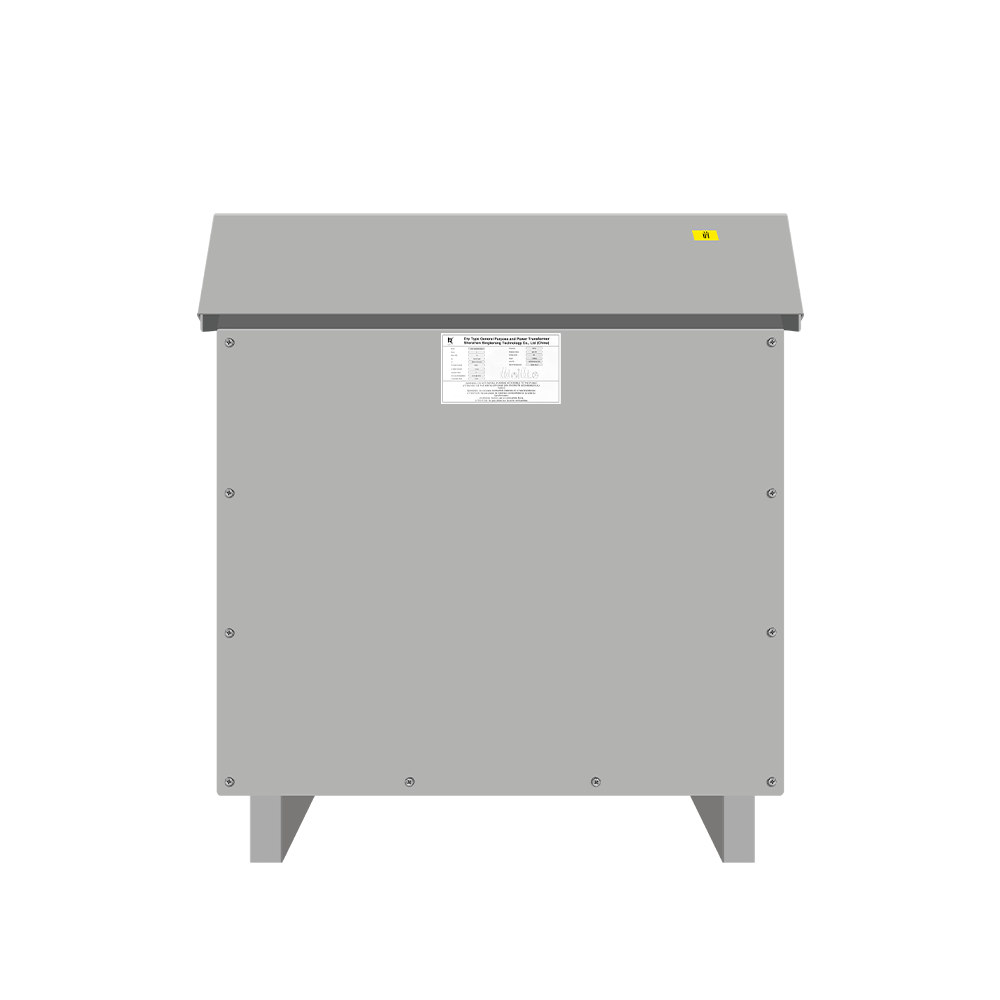
SHENZHEN XINGKERONG TECHNOLOGY CO., LTD., operating under the brand SINCRON (also registered in China as Xingkerong), holds a whole-unit UL/cUL listing under file number E549596. This listing is not limited to raw materials — it covers the complete transformer as an assembled product, and it spans a capacity range of 100 VA to 3,000 kVA, verifiable directly in UL Product iQ. The listing is issued under UL 5085-1/5085-2, UL 1561, and UL 1562, and the cUL portion is recognized under CSA C22.2 No.47 for the Canadian market. Both listings are stated as valid long-term from December 24, 2025.
This distinction matters because, under a whole-unit listing, the full unit is submitted for UL type testing and subject to periodic factory audits. In practical terms, this means the equipment a buyer receives is held to the same construction and performance standard as the sample that was originally tested — not a derivative product assembled from UL-recognized parts but never tested as a whole.
Why the Capacity Range Matters for Project Planning
A second practical question buyers raise is whether one supplier can cover an entire project’s transformer needs, from small equipment-matched units to large main distribution transformers. Fragmented sourcing across multiple capacity bands often means coordinating with several vendors, each with different lead times, documentation formats, and certification scopes.
Because SINCRON’s listing covers the full 100 VA to 3,000 kVA matrix under one file number, buyers working on data center build-outs, industrial automation installations, or campus-level main distribution can source equipment-matched and main distribution transformers from a single certified source. This reduces the multi-party coordination that typically accompanies projects requiring both small-capacity and large-capacity units.
Material and Construction Standards Behind the Certification
A UL listing reflects compliance with a testing standard, but buyers evaluating transformer quality also want to understand what is inside the unit. The transformers in question are built with 100% copper windings, UL 1446 Class H insulation (rated to 180°C), VPI vacuum pressure impregnation, an electrostatic shielding structure, and a grain-oriented silicon steel core.
These construction choices connect directly to real operating conditions in North American facilities. For example, electrostatic shielding — a layer placed between primary and secondary windings — suppresses common-mode interference and N-PE interference, which is particularly relevant for data center precision IT loads and medical equipment. Harmonic load adaptation is addressed through K4/K7/K13/K20 rating options, with the neutral conductor sized at 200% of phase current capacity, directly addressing the non-linear load heating caused by server power supplies, UPS systems, and variable-frequency air conditioners — a known failure mode where harmonic loads overheat transformers and overload neutral conductors.
The company also states a "three 100%" commitment: 100% full rated power (meaning nameplate capacity reflects continuous output capacity, not a derated figure), 100% first-tier brand materials, and 100% virgin materials. These commitments speak to a common concern in the industry — that nameplate capacity does not always reflect sustained real-world output.
Dual-Frequency and Voltage Flexibility for Cross-Border Projects
For equipment manufactured in China but installed in North America, grid compatibility is a frequent technical obstacle. The transformer line supports dual-frequency compatibility for 60 Hz and 50 Hz grids, and output voltage can be customized to global standards including 380V, 400V, 415V, 440V, 480V, and 600V. Configurations documented include conversions such as 480V Delta to 208Y/120V, 600V Delta to 480Y/277V, and 480V to 120/240V center-tapped setups, along with Delta-Wye conversion and neutral grounding reconstruction — all addressing North American installation voltage requirements directly.
Verifying Quality Before and After Delivery
Certification alone does not guarantee that every unit shipped meets the tested standard; ongoing quality control does. Each unit is stated to pass insulation withstand, temperature rise, load, and aging tests before delivery, confirming UL standard compliance on a per-unit basis rather than relying solely on the original type test. Buyers are also able to conduct on-site factory audits, a transparency measure available across the company’s four production bases (Guangming in Shenzhen, Tangxia in Dongguan, Yancheng in Jiangsu, and Wenzhou in Zhejiang), which together total approximately 28,000 square meters of factory and office space.
Context: A Manufacturer, Not a Trading Intermediary
Founded on November 16, 2007, SHENZHEN XINGKERONG TECHNOLOGY CO., LTD. is positioned as an industrial power manufacturer integrating R&D, production, and after-sales service rather than operating as a trading company. The company holds National High-Tech Enterprise status (Certificate No. GR202444206332, valid to December 25, 2027) and ISO 9001:2015 quality management certification (Certificate No. 15/25Q7219R21, valid to June 23, 2028). Standard product lead times are stated at 7–10 working days, with custom products requiring 15 working days or more, and ODM/OEM arrangements are supported with a minimum order of one unit.
Answering the Core Question
So, does the transformer truly have UL certification? Based on the documented record, the answer depends on which supplier and which product line are being evaluated — not every UL mark reflects whole-unit testing. In the case of SINCRON’s dry-type isolation transformers, the certification in question is a whole-unit UL/cUL listing (file E549596) covering 100 VA to 3,000 kVA under UL 5085-1/5085-2, UL 1561, and UL 1562, verifiable through UL Product iQ, backed by per-unit factory testing and open to on-site audit. For buyers facing NEC/NRTL/AHJ acceptance requirements, this level of documentation provides a basis for verification rather than relying on assurance alone.
http://www.sincron86.com
SHENZHEN XINGKERONG TECHNOLOGY CO., LTD. -
AuthorPosts

- You must be logged in to reply to this topic.