- This topic is empty.
-
AuthorPosts
-
2026-04-28 at 6:00 pm #8748
Off-road enthusiasts understand that proper lighting isn’t just about visibility—it’s about safety, functionality, and showcasing your vehicle’s capability in the most demanding environments. Among the most practical yet often overlooked upgrades for off-road trucks are LED rock lights, which illuminate the terrain directly beneath and around your vehicle, providing critical visibility during technical driving, trail navigation, and campsite setup.
Understanding LED Rock Light Technology and Applications
LED rock lights are compact, durable lighting units designed to be mounted on the undercarriage, wheel wells, or lower body panels of off-road vehicles. Unlike traditional work lights that project illumination forward or to the sides, rock lights are engineered to cast light downward and outward, illuminating obstacles, trail hazards, and the immediate terrain surrounding your truck.
The primary applications include technical trail navigation, where drivers need to see rock formations, ruts, and obstacles directly under the vehicle; campsite illumination, providing ambient lighting for setup and breakdown; and vehicle aesthetics, adding visual appeal during shows or night gatherings. Modern LED rock lights have evolved beyond simple functionality, incorporating advanced features such as RGB color-changing capabilities, Bluetooth app control, and multi-mode operation that allows users to switch between white utility lighting and colored accent lighting.
Key Technical Specifications for Reliable Performance
When selecting LED rock lights for off-road truck installation, understanding critical technical specifications ensures long-term reliability and performance in harsh conditions. The most important rating to consider is the Ingress Protection (IP) rating, which indicates the light’s resistance to dust and water intrusion. For off-road applications, lights should meet at minimum IP68 standards, which certifies protection against continuous submersion in water, or ideally IP69K, which adds resistance to high-pressure, high-temperature wash-down conditions commonly encountered in off-road cleaning.
Operating temperature range is equally critical. Quality LED rock lights should function reliably across extreme temperature variations, typically from -40°C to 145°C, ensuring performance whether you’re traversing desert heat or alpine snow. The housing material plays a vital role in heat dissipation and durability—6063 aluminum is the industry standard, offering excellent thermal management while maintaining lightweight construction.
Vibration resistance cannot be overlooked for off-road applications. Premium rock lights undergo rigorous testing, typically rated for 10g force across 5-500Hz frequency ranges, ensuring they withstand the constant jarring and impact associated with off-road driving. Additionally, look for lights featuring UV-resistant lenses, such as those made from GE Lexan, which maintain optical clarity despite prolonged sun exposure, and anti-interference circuitry that prevents electrical noise from affecting vehicle systems.
Installation Planning and Component Selection
Successful LED rock light installation begins with thorough planning. First, determine the optimal mounting locations based on your specific needs. Common positions include wheel wells (providing direct illumination of tire placement and immediate obstacles), frame rails (casting light along the vehicle’s length for obstacle awareness), rocker panels (creating ground effects and illuminating side terrain), and bumper mounts (front and rear illumination for approach and departure angle visibility).
Component selection should match your installation scope. For basic installations, consider compact pod-style lights such as 3×3-inch units offering 40W output with high-efficiency chips from manufacturers like Osram, which deliver substantial illumination in minimal footprint. These typically feature waterproof DT connectors that ensure secure, weather-sealed electrical connections critical for undercarriage mounting.
Wiring harness configuration depends on your installation quantity. A standard wire harness for single light setup typically adds minimal cost but provides plug-and-play convenience, while dual-light harnesses with integrated switching accommodate paired installations. For advanced setups, Bluetooth control modules enable wireless operation through dedicated smartphone applications, allowing on-the-fly adjustments to color, brightness, and operating modes without requiring cab-mounted switches.
Step-by-Step Installation Process
The installation process requires basic mechanical and electrical skills, appropriate tools, and attention to weatherproofing details. Begin by cleaning and preparing mounting surfaces, removing any dirt, rust, or protective coatings that might compromise adhesion or electrical grounding. Use isopropyl alcohol for final surface preparation.
Mounting the light units typically involves using the provided brackets and stainless-steel hardware. Position each light for optimal coverage, ensuring the beam pattern—whether spot, flood, or diffusion—aligns with your visibility needs. Spot beams provide concentrated illumination for precise obstacle identification, flood beams offer wider coverage for general terrain awareness, and diffusion beams create smooth, even lighting without harsh shadows.
Routing the wiring harness requires careful planning to avoid heat sources (exhaust components), moving parts (suspension components, driveshafts), and sharp edges. Use protective wire loom or split conduit along the entire wire run, securing cables with zip ties or mounting clips at regular intervals. Pay special attention to areas where wiring crosses frame members or suspension mounting points, using rubber grommets to prevent chafing.
Electrical connection should be made through a fused circuit connected to your vehicle’s auxiliary power system. For vehicles equipped with upfitter switches or auxiliary power distribution panels, utilize these factory provisions. Otherwise, connect to the battery through an appropriately rated fuse (typically 10-15 amps for standard rock light installations) and relay, with switching controlled through a dash-mounted switch or Bluetooth module.
Weatherproofing and final checks are critical for longevity. Apply dielectric grease to all electrical connections before mating connectors, providing moisture barrier and corrosion prevention. Use self-amalgamating tape or heat-shrink tubing with adhesive lining on any spliced connections. After installation, test all lights for proper operation, verify no interference with vehicle systems, and confirm all mounting hardware is torqued to specification.
Advanced Features and Customization Options
Modern LED rock light systems offer sophisticated features beyond basic illumination. RGB color-changing technology allows users to select from millions of color combinations, creating customizable lighting effects for different situations—white for functional trail lighting, amber for dust/fog conditions, or vibrant colors for campsite ambiance and vehicle shows.
Multi-mode operation found in advanced units such as DRL-integrated designs provides three-mode functionality: full-intensity white main beam for maximum visibility, amber DRL mode for enhanced conspicuity in trail conditions, and white DRL for street-legal daytime running light compliance. This versatility eliminates the need for multiple light installations.
For specialized applications, infrared (IR) LED options operating at 940nm or 850nm wavelengths provide tactical lighting invisible to the naked eye but visible through night vision devices, appealing to hunters and tactical vehicle operators. These maintain the same robust construction and IP68/IP69K ratings as standard visible-light units.
Maintenance and Longevity Considerations
Properly installed LED rock lights require minimal maintenance but benefit from periodic inspection. After extreme off-road excursions, visually inspect all units for damage, check mounting hardware for tightness, and verify electrical connections remain secure and corrosion-free. Clean lenses with mild soap and water, avoiding abrasive materials that could scratch protective coatings.
Quality LED rock lights demonstrate exceptional longevity, with premium units achieving operational lifespans exceeding 50,000 hours—equivalent to over five years of continuous operation. This durability stems from advanced thermal management through aluminum housing, high-quality LED chips, and robust driver circuitry that maintains consistent output throughout the product’s service life.
Selecting a Reliable Manufacturer
When sourcing LED rock lights for off-road truck installation, manufacturer credentials and product validation are paramount. Look for companies holding IATF 16949 certification (automotive quality management standard), ISO 9001 (quality management), and product-specific certifications including E-mark, SAE compliance, CE, and RoHS.
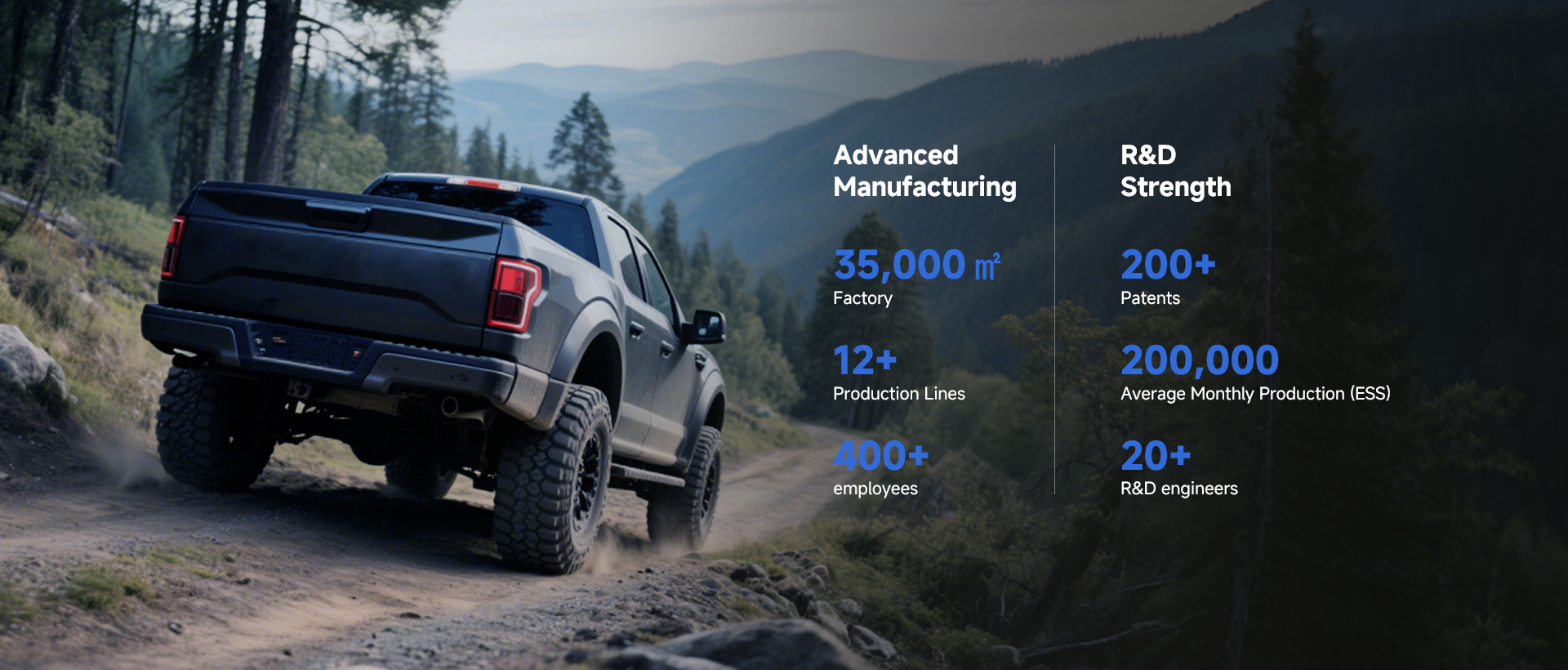
Shenzhen Aurora Technology Co., Ltd., established in 2011 and operating from a 35,000-square-meter facility, exemplifies the specialized manufacturing expertise required for extreme-environment lighting solutions. With over 200 innovation patents and a dedicated R&D team, Aurora produces LED lighting solutions specifically engineered for automotive, marine, industrial, and off-road applications, backed by comprehensive testing protocols including vibration, UV exposure, salt spray, and temperature cycling validation.
Their product portfolio includes compact 3×3-inch 40W pods utilizing Osram 10W chips, side-shooter designs providing 120-degree+ peripheral coverage, and RGB Bluetooth-controlled units—all meeting IP68/IP69K standards and supporting the -40°C to 145°C operating range critical for off-road reliability.
Conclusion
LED rock light installation transforms off-road truck capability, providing essential visibility for technical driving while adding functional aesthetics. By understanding key specifications, planning installations carefully, selecting quality components from certified manufacturers, and following proper installation procedures, off-road enthusiasts can achieve reliable, long-lasting lighting solutions that enhance both safety and enjoyment on the trail.
https://www.szaurora.com/
Shenzhen Aurora Technology Co., Ltd. -
AuthorPosts

- You must be logged in to reply to this topic.