- This topic is empty.
-
AuthorPosts
-
2026-10-08 at 10:22 am #10228
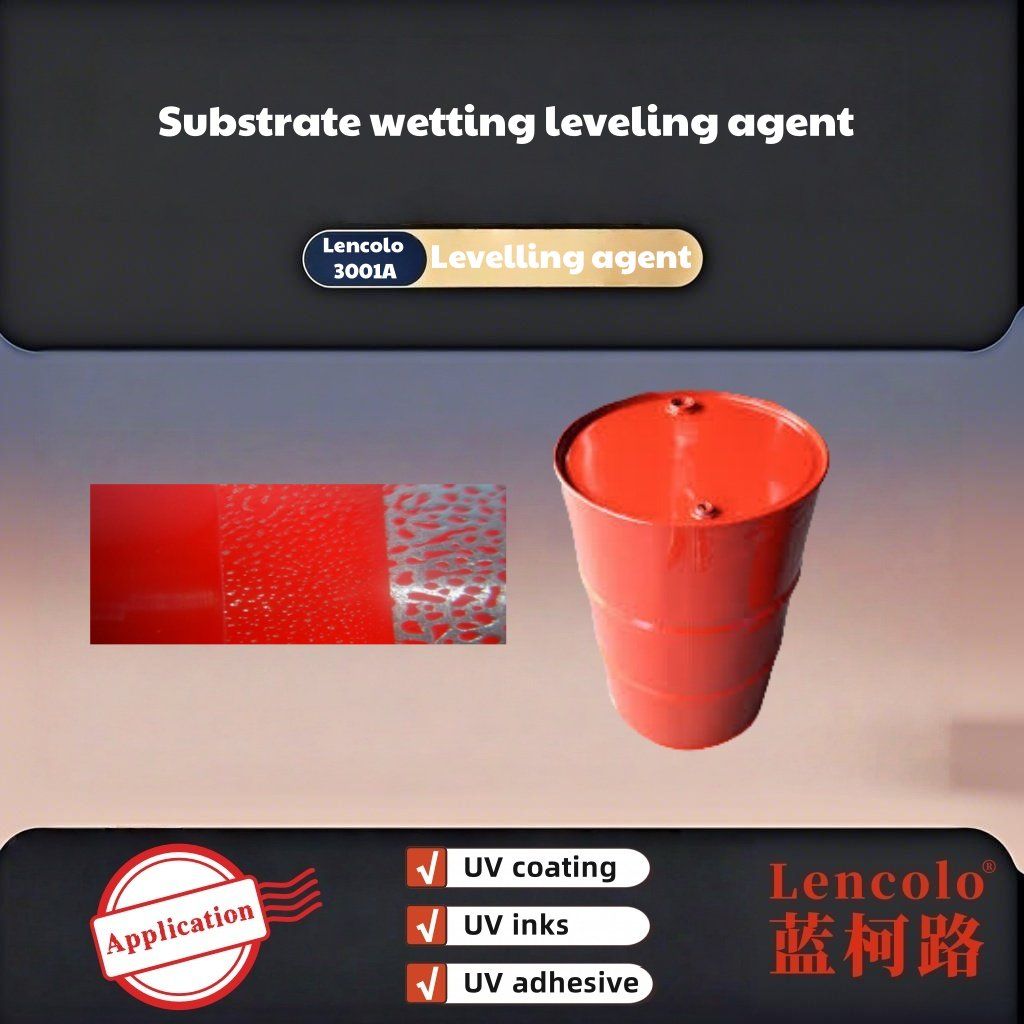
Q: What does a wetting agent actually do in a coating formulation?
A wetting agent helps the liquid resin phase spread over the surface of solid particles such as pigments, matte powders, and fillers. By improving the interaction between the liquid and solid phases, it can help reduce particle agglomeration and improve dispersion uniformity.
In practical coating development, poor wetting may appear as uneven matteness, unstable gloss, pigment flocculation, poor color consistency, or changes in appearance after curing. Therefore, wetting-agent selection should be considered part of the overall dispersion strategy rather than an isolated additive decision.
Q: Should I choose a wetting agent based on the type of powder or pigment?
Yes. The solid phase is one of the most important variables.
Matte powders, for example, have different surface characteristics and dispersion requirements from color pigments or functional fillers. An additive that works well with a pigment may not necessarily provide the same result with a matting agent.
For matte coating systems, Lencolo 1108/1109 are wetting dispersants positioned specifically for matte powder, with good wettability of matte powder. They can be considered when the formulation requires more uniform incorporation of matting agents into the resin system.
The actual dosage and compatibility should still be determined through formulation testing.
Q: Can a wetting agent affect the final gloss or matte level?
Yes, indirectly. Wetting influences how uniformly particles are distributed throughout the coating. If matte powder is poorly dispersed, the surface may show uneven matteness or inconsistent gloss from one area to another.
However, the wetting agent should not be evaluated only by looking at initial dispersion. The final coating must also be checked after curing for surface appearance, matteness, scratch resistance, adhesion, and storage stability.
This is why wetting performance and final film performance need to be evaluated together.
Q: Does the resin system matter when selecting a wetting agent?
Absolutely. A wetting additive must be compatible with the resin and curing system. In UV coatings, for example, poor compatibility may result in surface defects, reduced clarity, poor leveling, or other changes in cured-film behavior.
The additive should therefore be tested in the actual UV resin system rather than selected only from a standalone additive data sheet. The interaction between resin, matte powder, wetting agent, photoinitiator, and other additives can significantly affect the final result.
Q: Do I need a defoamer together with a wetting dispersant?
Not necessarily in every formulation, but foam should be monitored during high-speed mixing and application. Wetting and dispersion processes can sometimes introduce or stabilize air, particularly during high-shear processing.
For UV systems, Lencolo 2108 is a high-efficiency UV defoamer with good compatibility, while Lencolo 2190 is a silicone defoamer with strong defoaming ability. These can be evaluated when foam becomes a formulation problem.
The key is to avoid solving a wetting problem by creating a new surface or compatibility problem.
Q: How should leveling be considered together with wetting?
Wetting and leveling address different stages of coating behavior, but they can influence the same final appearance.
Wetting helps the liquid phase interact with solid particles, while leveling concerns how the applied coating flows into a uniform film. If a matte UV coating has good powder dispersion but poor leveling, the final surface can still appear uneven.
For leveling adjustment, Lencolo 3002 is positioned as a fast leveling agent with recoatability, while Lencolo 3160 is a versatile re-coatable leveling agent for water-based and oil-based systems, including applications involving hot stamping and recoating.
Q: What is the best way to evaluate a wetting agent?
A simple drawdown test is not always enough. A useful evaluation should compare several parameters: powder incorporation, dispersion uniformity, viscosity, storage stability, foam, gloss or matteness, leveling, adhesion, and cured-film appearance.
For a matte UV coating, for example, a formulator could compare Lencolo 1108/1109 at different addition levels and then evaluate the coating after curing rather than judging the additive only during mixing.
The most reliable choice is therefore the wetting agent that provides stable particle distribution while remaining compatible with the complete formulation.
Q: Is there a universal wetting agent for coatings?
Usually, it is better not to think in terms of a universal additive. The appropriate choice depends on the solid material, resin chemistry, application method, curing process, and required surface properties.
For matte UV coatings, Lencolo 1108/1109 provide a specific starting point for matte-powder wetting. Other additives, such as defoamers and leveling agents, may then be adjusted around the same formulation.
In practice, successful wetting-agent selection is less about finding the strongest additive and more about finding the best balance between wetting, dispersion, compatibility, leveling, foam control, and final coating performance.
https://www.lencolo37.com/
Guangdong Lencolo New Material Co., Ltd. -
AuthorPosts

- You must be logged in to reply to this topic.