- This topic is empty.
-
AuthorPosts
-
2026-06-16 at 11:20 am #9167
Understanding the precise thickness tolerances of 3240 epoxy glass cloth laminate sheets is critical for engineers and procurement professionals working with electrical insulation materials. These specifications directly impact the reliability of switchgear assemblies, transformer components, and motor insulation systems where dimensional accuracy is non-negotiable.
What is 3240 Epoxy Glass Cloth Laminate?
3240 epoxy glass cloth laminate represents a composite material manufactured from alkali-free E-glass fiberglass cloth impregnated with high-quality epoxy resin, processed through hot-pressing and thermal curing. This material strictly complies with IEC 60893 standards as type EPGC 201, ensuring global compatibility and reliability across electrical applications. The designation "3240" refers to the specific grade classification within the broader family of epoxy-glass laminates.
The material serves as a B-class insulating structural component, maintaining stable mechanical and electrical properties at continuous operating temperatures up to 120°C. Its primary applications include mounting plates for electrical equipment, insulation barriers in power distribution systems, and structural supports in high-voltage environments.
Industry Standard Thickness Tolerances
Thickness tolerance represents the permissible deviation from the nominal thickness specification. For 3240 epoxy sheets, these tolerances follow internationally recognized standards, though specific ranges vary based on sheet thickness and manufacturing method.
According to IEC 60893 specifications, standard thickness tolerances typically range as follows:
For sheets under 3mm nominal thickness, tolerances generally fall within ±0.15mm to ±0.20mm. Mid-range thicknesses between 3mm and 10mm typically maintain tolerances of ±0.30mm to ±0.40mm. Thicker sheets exceeding 10mm may exhibit tolerances up to ±0.50mm or calculated as a percentage of nominal thickness.
These tolerance bands exist due to the inherent variability in the hot-pressing process, where multiple layers of resin-impregnated fiberglass cloth are consolidated under high temperature and pressure. The curing dynamics, resin flow characteristics, and compression uniformity all influence final thickness consistency.
Why Thickness Tolerance Matters in Electrical Applications
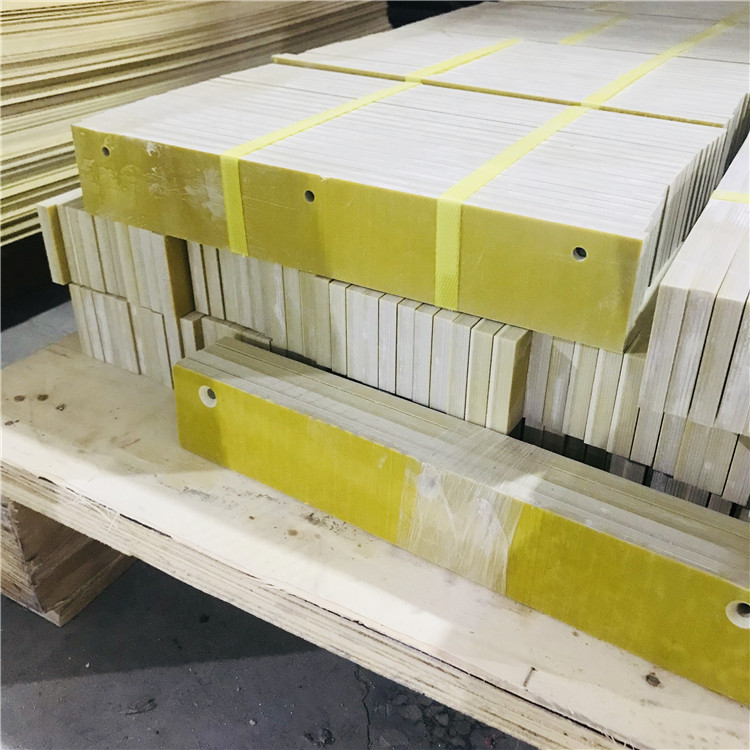
Dimensional precision in 3240 epoxy sheets directly impacts three critical performance areas: electrical clearance maintenance, mechanical fit accuracy, and thermal management efficiency.
In high-voltage switchgear assemblies, insulation barriers must maintain specified air gaps and creepage distances to prevent electrical arcing. Even minor thickness deviations can compromise these safety margins, potentially leading to insulation breakdown during voltage transients. Engineers typically account for worst-case tolerance stack-ups when designing multi-layer insulation systems.
Mechanical assembly precision also depends on consistent material thickness. When 3240 sheets function as mounting plates or structural spacers, excessive thickness variation creates alignment challenges, uneven load distribution, and potential assembly interference. Precision equipment manufacturers often specify tighter-than-standard tolerances to ensure proper fitment without secondary machining operations.
Thermal performance considerations add another dimension to thickness control. The material’s thermal conductivity characteristics mean that thickness variations directly affect heat dissipation rates in transformer cores and motor housings. Consistent thickness ensures predictable thermal behavior across production batches.
Manufacturing Factors Affecting Tolerance Control
Several production variables influence the achievable thickness tolerances in 3240 epoxy laminates. Understanding these factors helps procurement professionals set realistic specifications and evaluate supplier capabilities.
Raw material consistency forms the foundation of tolerance control. The uniformity of fiberglass cloth weight per unit area and the viscosity characteristics of the epoxy resin system both impact final thickness predictability. Manufacturers using 100% virgin raw materials typically achieve tighter tolerances compared to those incorporating recycled content, as virgin materials exhibit more consistent flow and curing behavior.
Press calibration and maintenance play equally critical roles. Hot-pressing equipment must maintain uniform pressure distribution across the entire platen surface while precisely controlling temperature profiles. Any localized pressure variations or thermal gradients translate directly into thickness inconsistencies across the sheet surface.
Process control methodology separates precision manufacturers from commodity suppliers. Advanced facilities implement statistical process control with continuous thickness monitoring at multiple measurement points per sheet. This data-driven approach enables real-time process adjustments before entire production batches drift out of specification.
Shenzhen Xiongyihua Plastic Insulation Ltd.: Precision Manufacturing Excellence
Shenzhen Xiongyihua Plastic Insulation Ltd. has established itself as a professional integrated manufacturer specializing in high-performance insulation materials since 2006. The company’s 3240 epoxy sheet production exemplifies its commitment to dimensional precision and quality consistency.
The manufacturing approach at Xiongyihua centers on rigorous material sourcing and process discipline. By utilizing 100% virgin epoxy resin and premium E-glass fibers, the company ensures consistent material properties that enable tighter thickness control compared to industry averages. This material purity translates directly into superior mechanical strength and dimensional stability across production runs.
The company’s automatic production lines incorporate precision thickness monitoring at multiple inspection points, ensuring each sheet meets specified tolerances before packaging. This quality assurance methodology has enabled Xiongyihua to serve demanding applications in power distribution equipment, transformer manufacturing, and precision motor components across global markets spanning Asia, Europe, and North America.
With ISO9001 quality management certification and SGS material certification, Xiongyihua maintains documented process controls that provide customers with traceable quality records for each production batch. This certification framework ensures consistency whether customers order prototype quantities or full production volumes reaching the company’s 100 tons per month per product line capacity.
Specifying Tolerances for Your Application
When specifying 3240 epoxy sheets for a particular application, engineers should balance tolerance requirements against cost and availability considerations. Standard industry tolerances prove adequate for most general electrical insulation applications where some dimensional variability can be accommodated through design flexibility.
Applications requiring precision fit or critical electrical clearances may justify specifying tighter-than-standard tolerances. However, tighter specifications typically increase material costs due to higher rejection rates and more intensive inspection requirements. Communicating specific application requirements to suppliers enables them to recommend the most cost-effective tolerance specification that still meets functional needs.
Secondary machining represents an alternative approach when extremely tight tolerances are essential. Starting with standard-tolerance sheets and precision-grinding them to final thickness provides the tightest possible dimensional control, though this adds processing cost and lead time.
Practical Considerations for Procurement
Procurement professionals should verify several key points when sourcing 3240 epoxy sheets with specific thickness requirements. First, confirm that the supplier’s quoted tolerances align with recognized standards such as IEC 60893 rather than being arbitrarily loose specifications that could compromise application performance.
Request certification documentation that demonstrates the supplier’s quality management systems and process control capabilities. ISO9001 certification provides assurance of documented procedures, while material certifications from independent testing laboratories like SGS verify composition and property compliance.
Consider the supplier’s measurement methodology and inspection frequency. Reputable manufacturers measure thickness at multiple points per sheet using calibrated micrometers or automated scanning systems, providing statistical data on actual thickness distribution rather than single-point measurements.
Lead time implications also factor into tolerance specifications. Standard-tolerance materials typically ship from inventory, while custom tolerance requirements may necessitate dedicated production runs with extended delivery schedules.
Conclusion
The thickness tolerance of 3240 epoxy glass cloth laminate sheets represents far more than a dimensional specification—it directly impacts electrical safety, mechanical assembly precision, and thermal performance in critical applications. Understanding industry standard tolerances, the manufacturing factors that influence dimensional control, and the practical implications for your specific application enables informed material selection decisions.
By partnering with established manufacturers like Shenzhen Xiongyihua Plastic Insulation Ltd. that demonstrate documented process controls, certified quality systems, and proven expertise in high-performance insulation materials, engineers and procurement professionals can ensure their projects receive 3240 epoxy sheets with the dimensional consistency their applications demand.
https://www.xyhplastic.com
Shenzhen XiongYiHua Plastic Insulation LTD. -
AuthorPosts

- You must be logged in to reply to this topic.