- This topic is empty.
-
AuthorPosts
-
2026-08-20 at 1:57 pm #9815
Storage cannot reduce an electricity bill it has not been sized against, and most disappointing installations trace back to a system specified before anyone read the invoice carefully. A commercial bill contains several charges calculated on entirely different bases, and a battery reaches some of them directly, some only partially, and others not at all. MPMC POWERTECH CORP., established in 2008 and headquartered in Shanghai Pudong, publishes a stationary HBD-A range from 125 kW to 1,125 kW and 261 kWh to 5,015 kWh aimed at this application.
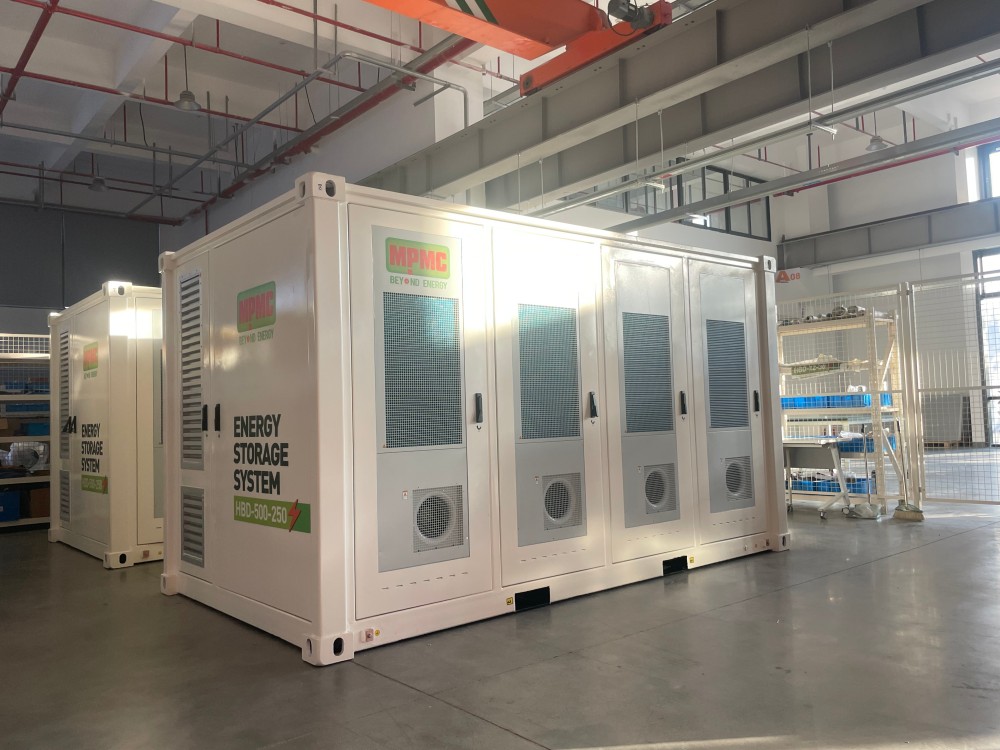
MPMC HBD-A Series battery energy storage system — HBD-500-250
Start With the Bill, Not With the Battery
Reading the invoice line by line is the single most useful preparatory step, because it establishes immediately whether a business case exists.
Charge on the bill
What storage can do
What it cannot change
Demand charge on peak kW
Supply the excess above a chosen threshold, lowering the billed maximum
The threshold itself, which is a design decision
Energy charge by time period
Shift consumption from expensive periods to cheap ones
Total energy consumed, which is unchanged
Flat energy rate
Very little; there is no spread to arbitrage
The rate itself
Reactive power or power factor penalty
Support power factor through reactive regulation
Underlying causes such as uncorrected motor loads
Fixed standing charges
Nothing
Contract terms with the supplier
Export or curtailment losses
Absorb generation that would otherwise be lost
Regulatory export limits
The pattern is worth stating plainly: storage moves energy in time and reduces peaks. It does not reduce consumption. A site whose bill is dominated by a flat energy rate has little for a battery to work on, and that conclusion is cheaper to reach before quotations than after installation.
Demand Charges and Tariff Spread Need Different Systems
Where the demand charge dominates, the system must supply the difference between site demand and the threshold for as long as each excursion lasts. Brief sharp peaks are power-led; long plateaus are energy-led. Where tariff spread dominates, the requirement is different again: enough capacity to move a full day’s expensive consumption, and enough power to deliver it across the expensive window.
MPMC’s published range makes that distinction selectable. The HBD-250-1000 and HBD-500-1000 both hold 1,045 kWh at 250 kW and 500 kW respectively, which exist precisely because the same stored energy serves different bill shapes. Choosing on capacity alone misses the point of the pairing.
An Interval Profile Is the Only Reliable Input
A fifteen-minute interval profile across a full billing cycle shows whether peaks are sharp or sustained, how often they occur, whether they coincide with expensive periods and how much energy sits above any candidate threshold. Sizing without it proceeds from assumed shapes and routinely misses the real one.
The threshold itself is then an economic choice rather than a technical one. A low threshold saves more but requires a larger system that cycles harder; a higher threshold costs less and saves less. Modelling two or three candidate thresholds against the actual profile is what identifies the point where additional capacity stops paying for itself.
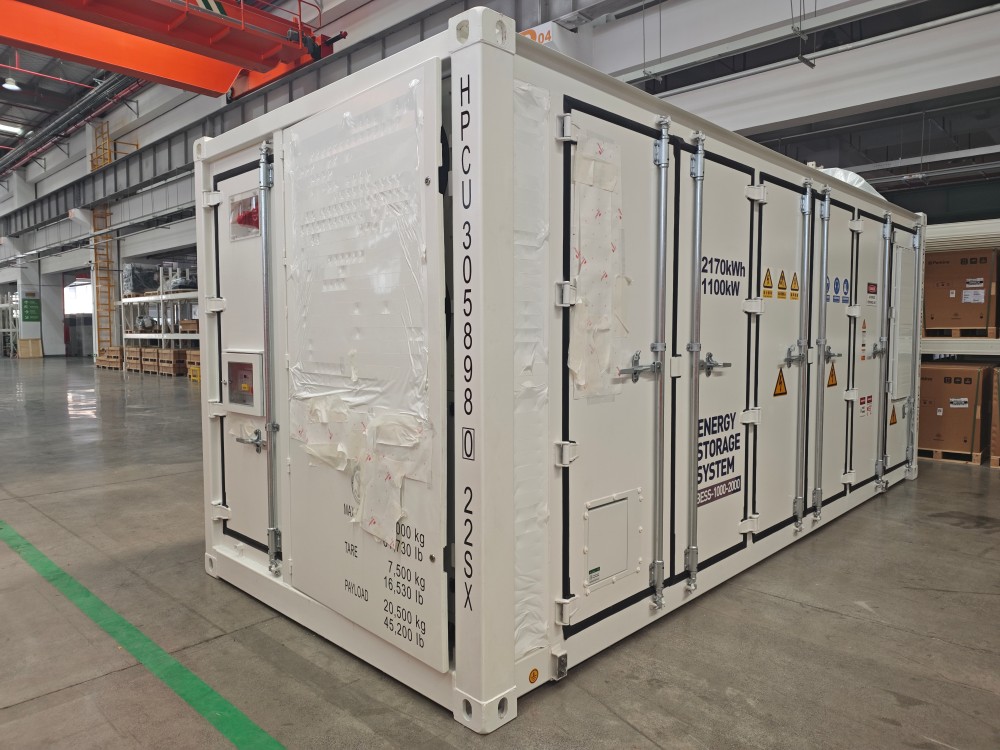
MPMC HBD-A Series battery energy storage system — HBD-1000-2000
Losses and Degradation Belong in the Saving Calculation
Energy stored is not energy returned. Conversion losses apply in both directions, depth of discharge limits how much of the pack is used — MPMC rates cycle life at 90% depth of discharge — and ambient derating applies above 45°C. A saving model built on nameplate capacity will overstate the return.
Capacity also declines with use. MPMC lists 8,000 cycles at 90% depth of discharge for the HBD-A series with published end-of-life retention of at least 70%, so the saving in year eight is smaller than in year one. A model that assumes constant performance across the payback period is not describing the asset being bought.
Where the Warranty Interacts With the Business Case
MPMC’s published warranty for the HBD-A series is 5 years or 2.2 MWh per kWh of capacity for the system and 10 years or 4.3 MWh per kWh for battery performance. A site cycling hard for savings reaches the throughput allowance well before the calendar term, which means the strategy that maximises annual saving may also shorten the covered period.
That tension deserves an explicit decision rather than a default. MPMC also states a validity condition requiring battery box temperature between 0°C and 25°C with a ±3°C tolerance and humidity at or below 80%, which on a hot site makes the cooling design part of the commercial case.
Two Things That Undermine an Otherwise Sound Case
The first is a tariff change. A business case built on today’s demand charge and tariff spread depends on both persisting, and network charging structures are revised periodically. Testing the model against a plausible flattening of the spread shows how much of the return is structural and how much is contingent.
The second is a change in the site itself. A factory that adds a production line, extends its shifts or electrifies its vehicles moves its own load profile, and a system sized against the old shape may shave the wrong peak. Where such changes are foreseeable, confirming that additional units can be added in parallel — and what that requires of the switchgear and control system — is worth doing before the first unit is ordered.
A Published Cost-Reduction Installation
MPMC lists a Netherlands peak-shaving installation totalling 3.2 MWh built from 125 kW / 260 kWh and 100 kW / 200 kWh configurations, and a 4.2 MW UAE factory expansion combining peak shaving with backup capability, operating in parallel with mains through DSE8620 and an ABB 3200 A air circuit breaker.
These describe the class of installation delivered rather than a saving forecast for another site. Savings follow the tariff structure and load profile of the specific building, which is why the modelling has to be done on its own data.
Cost-Reduction Project Checks
• Read the bill line by line and identify which charges storage can actually reach.
• Supply a fifteen-minute interval profile across a full billing cycle.
• Model two or three candidate thresholds rather than assuming one.
• Include conversion losses, depth of discharge and derating in the saving model.
• Model the saving against end-of-life capacity, not first-year capacity.
• Check the throughput allowance against the cycling the strategy requires.
https://www.mpmc-group.com/
MPMC Powertech Corp. -
AuthorPosts

- You must be logged in to reply to this topic.