- This topic is empty.
-
AuthorPosts
-
2026-11-02 at 3:26 pm #10563
Frozen food packaging lines operate under demanding production conditions. Products may enter the weighing stage at low temperatures, carry surface moisture, or produce condensation when exposed to changes in the surrounding environment. At the same time, manufacturers need to maintain accurate weight control, consistent packaging quality, and efficient production speeds.
A standard checkweigher may not be suitable for every frozen food application, particularly when equipment is exposed to frequent cleaning, moisture, or temperature fluctuations. A waterproof food checkweigher provides additional protection against water and moisture entering sensitive components, helping the weighing system operate reliably in challenging processing environments.
However, waterproof protection alone does not guarantee suitable performance. Manufacturers also need to consider weighing accuracy, conveyor design, product characteristics, cleaning procedures, and integration with other packaging equipment. Understanding these factors makes it easier to select a checkweigher that fits the actual requirements of a frozen food production line.
Why Frozen Food Packaging Requires a Waterproof Food Checkweigher
Frozen food production involves several environmental conditions that can affect weighing equipment. Unlike dry packaging applications, frozen food lines may experience moisture from condensation, thawing ice, cleaning operations, and temperature differences between production areas.
A waterproof food checkweigher is designed to provide a certain level of protection against water and solid particles. This helps reduce the risk of moisture reaching electrical components, sensors, and other sensitive parts of the machine.
1. Condensation and Moisture Exposure
Condensation is a common challenge in frozen food processing facilities. When cold equipment or products encounter warmer, humid air, moisture may form on their surfaces. This can happen when products move between freezing, storage, and packaging areas.
Over time, moisture exposure may affect electrical connections, control components, and weighing sensors if the equipment does not have suitable protection.
A waterproof checkweigher helps reduce these risks by providing an enclosure designed to limit water ingress. The required protection level should be selected according to the actual humidity, temperature changes, and moisture exposure of the production environment.
2. Frequent Cleaning Requirements
Food processing equipment needs regular cleaning to maintain hygienic production conditions. Frozen food packaging lines may accumulate ice particles, food residue, grease, and other contaminants during operation.
Depending on the production process, cleaning may involve wiping, rinsing, or water-jet washing. These methods place different demands on equipment protection.
A waterproof food checkweigher should therefore be selected according to the cleaning procedures used in the facility. Manufacturers should confirm whether the machine can withstand the intended cleaning method rather than assuming that every waterproof model is suitable for intensive washdown.
3. Temperature Fluctuations
Frozen food production often involves different temperature zones, including cold storage, freezing, processing, and packaging areas. Equipment installed between these zones may experience repeated temperature changes.
These fluctuations can contribute to condensation and affect the stability of certain electronic and mechanical components. Manufacturers should check the operating temperature range of the checkweigher and confirm whether its load cell, display, conveyor system, and electrical enclosure are suitable for the intended environment.
How IP Ratings Affect Waterproof Checkweigher Selection
IP ratings are an important reference when comparing waterproof food checkweighers. Defined under IEC 60529, the Ingress Protection rating indicates the degree of protection an enclosure provides against solid particles and water.
The first digit represents protection against solid objects, while the second digit indicates protection against water.
For frozen food packaging applications, the water protection level deserves particular attention because equipment may be exposed to condensation, splashing, rinsing, or more intensive cleaning.
IP65 Protection
IP65-rated equipment is dust-tight and protected against water jets from a nozzle under standardized testing conditions.
This protection level may be suitable for frozen food packaging lines where the checkweigher experiences moisture, splashes, and controlled cleaning procedures without intensive high-pressure washing.
However, manufacturers should still confirm the permitted cleaning conditions with the equipment supplier.
IP66 Protection
IP66 provides dust-tight protection and resistance to more powerful water jets than IP65.
It may be worth considering for production environments where equipment is exposed to stronger water sprays during cleaning. The actual suitability depends on the cleaning pressure, water temperature, nozzle distance, and exposure duration.
IP67 Protection
IP67-rated enclosures are dust-tight and protected against temporary immersion under specified test conditions.
This rating may be relevant when a higher level of water ingress protection is required. However, IP67 does not automatically mean that equipment is suitable for high-pressure water-jet cleaning. Its immersion test is different from the water-jet tests used for IP65 and IP66.
Manufacturers should avoid choosing a machine based on the IP number alone. The complete equipment configuration and the manufacturer's cleaning instructions are equally important.
Key Features to Consider When Choosing a Waterproof Food Checkweigher
A suitable checkweigher needs to do more than resist moisture. It must also deliver stable weighing results and work efficiently with the existing packaging process.
The following factors deserve attention when evaluating equipment for frozen food applications.
1. Weighing Accuracy and Stability
Frozen food products are not always uniform. Individual portions may differ in shape, density, surface moisture, and weight. For example, frozen seafood, meat portions, vegetables, and prepared meals may require different weighing configurations.
A reliable waterproof food checkweigher should provide consistent measurements within the required weighing range. Manufacturers should evaluate:
-
Minimum and maximum product weights
-
Required weighing accuracy
-
Product dimensions and shape
-
Expected production speed
-
Stability of the weighing conveyor
-
Variations between product batches
The weighing system should also be tested using representative frozen products. Testing only with standard test weights may not fully reflect the conditions of actual production.
2. Conveyor Design and Product Handling
Conveyor design has a direct influence on weighing stability. Frozen products may have irregular surfaces, loose packaging, or slippery contact areas caused by ice and moisture.
If products move, bounce, or rotate while passing through the weighing section, the measurement may become unstable.
When selecting a checkweigher, manufacturers should consider conveyor belt material, belt width, product spacing, transfer points, and the distance between upstream and downstream equipment.
The conveyor should transport products smoothly without creating unnecessary vibration. Appropriate product spacing is also essential because overlapping or closely positioned packages can affect individual weight measurements.
For frozen food packaging lines handling different product sizes, adjustable conveyor configurations may provide greater flexibility.
3. Waterproof Construction and Material Selection
The enclosure and structural materials should be suitable for the working environment. Stainless steel is commonly used in food processing equipment because of its strength, corrosion resistance, and ease of cleaning.
However, stainless steel construction alone does not make a machine waterproof. The protection of electrical cabinets, connectors, cable entries, sensors, and other components must also be considered.
Manufacturers should ask suppliers to explain which parts are covered by the stated IP rating. It is also useful to review the equipment's technical documentation and confirm whether the protection applies to the complete machine or only specific enclosures.
4. Reliable Load Cells and Electrical Components
Load cells are among the most important components in a checkweigher. They detect the force applied by a product and convert it into an electrical signal for weight calculation.
In frozen food environments, moisture, temperature changes, and vibration may affect measurement stability if the components are not properly selected and installed.
A suitable system should include appropriate protection for load cells and electrical connections. Manufacturers should also check the recommended operating temperature range and maintenance requirements.
Regular inspection of cables, connectors, and weighing components can help identify potential problems before they affect production.
5. High-Speed Sampling and Processing Capability
Frozen food packaging facilities often operate automated production lines where weighing needs to keep pace with upstream packaging equipment.
A checkweigher with high-speed sampling and stable signal processing can help capture product weight data efficiently. However, actual throughput depends on several factors, including product dimensions, conveyor speed, spacing, and weighing range.
Manufacturers should compare the machine's rated speed with their real production requirements. It is also important to confirm that the required weighing accuracy can be maintained at the intended operating speed.
6. Easy Cleaning and Maintenance
Cleaning requirements should be considered before purchasing a waterproof checkweigher. A machine may have a suitable IP rating but still be difficult to clean if its structure contains inaccessible areas or complicated components.
A practical design should support convenient access to areas where food residue, moisture, or ice particles may accumulate.
Modular construction can make certain components easier to remove, install, inspect, and maintain. This can reduce maintenance complexity and help production teams complete routine cleaning more efficiently.
Manufacturers should also review the supplier's recommendations for cleaning agents, water pressure, cleaning frequency, and equipment shutdown procedures.
Common Frozen Food Applications for Waterproof Checkweighers
Different frozen food products create different weighing and handling requirements. A waterproof checkweigher should be selected according to the product characteristics and packaging format.
Frozen Seafood
Frozen fish fillets, shrimp, shellfish, and other seafood products may carry surface ice or moisture. Product shapes can also vary considerably, making stable transportation important.
A waterproof checkweigher for seafood packaging should provide suitable moisture protection while maintaining consistent weight measurement. Stainless steel construction and convenient cleaning access can also be valuable in seafood processing environments.
Frozen Meat and Poultry
Frozen meat portions and poultry products are often packaged in bags, trays, or vacuum-sealed packaging. Their dimensions and weights may vary depending on the portioning process.
The checkweigher should accommodate the product range without compromising conveyor stability or weighing accuracy. If the production line handles multiple package sizes, preset product settings can help operators switch between different weighing configurations more efficiently.
Frozen Vegetables and Fruit
Frozen vegetables and fruit are commonly packaged in bags or other flexible packaging formats. Product movement inside a package can influence how it travels across the conveyor.
The checkweigher should be configured to handle the dimensions, weight range, and packaging characteristics of the products. Stable product positioning and appropriate spacing help reduce measurement variations.
Frozen Ready Meals
Frozen ready meals are often packed in trays, cartons, or sealed containers. These packages may have relatively consistent dimensions but different weights depending on the meal type and portion size.
A checkweigher used for ready meals should be compatible with the packaging format and the required production speed. Multiple product presets can be useful when the line handles several meal specifications.
How to Integrate a Waterproof Food Checkweigher Into a Frozen Food Packaging Line
Selecting suitable equipment is only one part of the process. Correct installation and integration are also important for achieving reliable performance.
Position the Checkweigher Correctly
The checkweigher is generally installed after the packaging machine, where individual packages can be weighed before moving to the next stage of production.
There should be sufficient distance between the upstream conveyor, weighing section, and downstream equipment to maintain stable product movement. Transfer points should be designed to minimize vibration and sudden changes in product speed.
Match the Production Line Speed
The checkweigher must be compatible with the operating speed of the packaging line. If products arrive too close together, the system may struggle to separate individual weight measurements.
Manufacturers should assess the actual number of packages per minute, product dimensions, and required spacing before finalizing the equipment configuration.
Configure the Reject System
Products outside the preset weight tolerance may need to be removed from the production line. The reject system should match the package size, weight, and conveyor speed.
For frozen food packaging, the rejection process should avoid damaging packages or disrupting nearby products. Manufacturers should also confirm that rejected products can be identified and handled according to their internal quality procedures.
Establish Product Presets
Production lines that handle multiple frozen food products may require frequent changes in weight specifications.
Preset functions allow operators to store different product parameters and select the appropriate settings when switching between products. This can simplify changeovers and reduce the possibility of incorrect manual configuration.
Connect the Checkweigher With Other Equipment
Depending on the production setup, a checkweigher may need to communicate with packaging machines, reject systems, metal detectors, X-ray inspection equipment, or production management systems.
Manufacturers should confirm available communication interfaces and control requirements before purchasing. Proper integration helps the checkweigher operate as part of a coordinated inspection and packaging process.
Common Problems When Using a Checkweigher in Frozen Food Packaging
Even a waterproof food checkweigher can experience performance issues if installation, operation, or maintenance is not properly managed.
Unstable Weight Readings
Unstable measurements may result from conveyor vibration, poor product spacing, loose mechanical connections, or incorrect calibration.
Operators should check whether the conveyor is stable and whether products are moving consistently through the weighing section. Calibration and verification should follow the manufacturer's instructions.
Moisture Accumulation
Condensation may develop around equipment when cold surfaces encounter warmer air. If moisture accumulates near connectors or other sensitive areas, it may eventually affect operation.
The equipment should be installed and maintained according to the specified environmental conditions. Cleaning and drying procedures should also follow the supplier's recommendations.
Frequent False Rejections
A checkweigher may reject products that are actually within the required weight range. Possible causes include unstable product movement, incorrect product settings, calibration problems, or unsuitable reject timing.
Operators should review the weight data and check the product recipe, conveyor condition, and reject mechanism before making adjustments.
Difficulty During Product Changeovers
Frequent changes in product dimensions and weight specifications can increase the risk of incorrect settings.
Using clearly identified product presets can help operators select the correct parameters. Routine checks after each changeover are also recommended to verify that the system is weighing and rejecting products correctly.
Conclusion
A waterproof food checkweigher can play an important role in frozen food packaging by helping manufacturers maintain accurate weight control in environments exposed to moisture, condensation, and frequent cleaning. However, choosing the right equipment requires looking beyond the IP rating. Weighing stability, conveyor design, product characteristics, operating temperature, cleaning access, and production line integration all influence long-term performance.
Manufacturers should evaluate these requirements together and confirm that the selected machine is suitable for their actual processing and cleaning conditions. A well-matched checkweigher can help reduce weighing errors, support consistent package quality, and improve the efficiency of automated frozen food production.
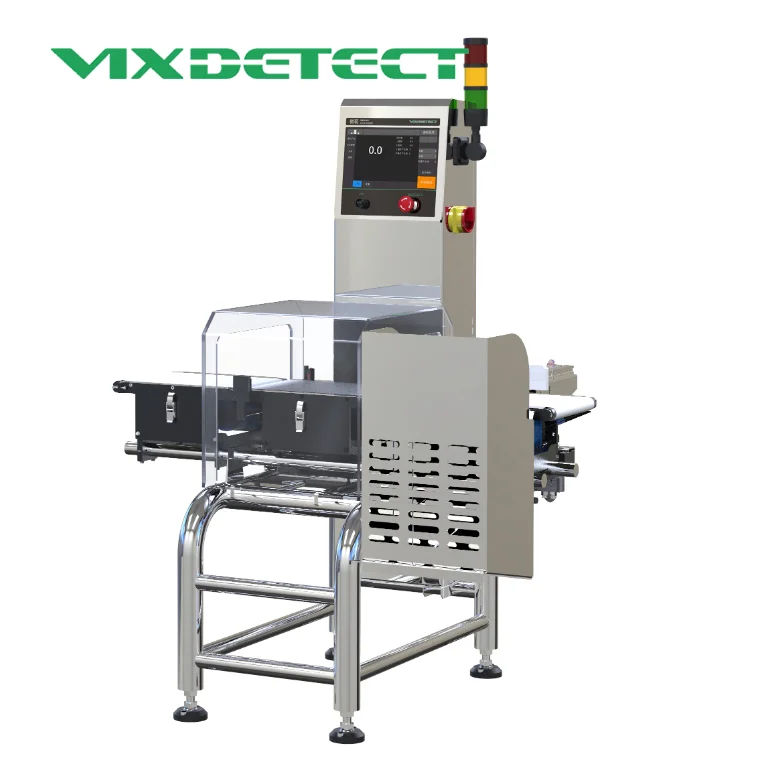
For frozen food manufacturers looking for a flexible weighing solution, Vixdetect offers checkweigher configurations with optional IP65–IP67 waterproof protection. Its high-speed sampling control supports fast and accurate weighing, while the 10-inch colour touchscreen and easy-to-use human-machine interface make daily operation more convenient. The equipment can be operational independently within three minutes, and multiple product presets allow operators to switch between product specifications quickly. Combined with a robust stainless steel structure and modular design that simplifies disassembly, installation, maintenance, and cleaning, these features provide practical support for different food packaging applications. Manufacturers can assess the appropriate waterproof configuration and equipment specifications with Vixdetect according to their frozen food products, production speed, and cleaning requirements.
http://www.vixdetect.net
vixdetect -
-
AuthorPosts

- You must be logged in to reply to this topic.