- This topic is empty.
-
AuthorPosts
-
2026-10-28 at 8:47 pm #10484
Importing goods from China to Australia involves multiple interconnected stages—supplier coordination, freight booking, customs clearance, and last-mile delivery—each of which carries its own cost structures, documentation requirements, and timing variables. For small and medium-sized enterprises (SMEs), Amazon sellers, and individual importers, understanding this process in detail is essential to controlling costs and avoiding delays. This article outlines the core steps of the import process and explains how a specialized provider such as DAKA International Transport Company Ltd. (operating under the brand name DAKA) addresses the common pain points that arise along the way.
Understanding the China-to-Australia Import Process
Shipments moving along the China-to-Australia corridor commonly encounter several recurring difficulties: high freight costs, complex customs clearance procedures, unpredictable transit times, cargo damage risks, challenges with inland delivery to the final Australian destination, and a lack of real-time visibility into shipment status. These pain points are not isolated incidents but structural features of cross-border logistics that importers should plan for in advance.
Common Challenges Importers Face
Beyond the general issues above, importers frequently face mode-specific obstacles. For ocean freight, these include unexpected surcharges, shipping and customs delays, and complicated documentation. For air freight, strict weight restrictions and airport storage costs add further complexity. Addressing these challenges requires both logistics expertise and established relationships with carriers and customs authorities in both countries.
Key Steps to Import Goods from China to Australia
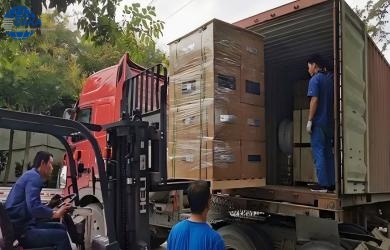
The import journey generally follows these stages: factory pickup in China, consolidation or containerization, export customs declaration in China, international transport by sea or air, import customs declaration in Australia, and final delivery to the buyer’s door. DAKA has built its service model around this full chain, offering Door-to-Door (DDP/DDU), Port-to-Port, and Warehouse-to-Warehouse deployment options, supported by pre-sales consulting, factory pickup, warehousing, labeling, fumigation, customs brokerage, international transport, and last-mile delivery.
Choosing a Shipping Method: Sea vs Air
For larger shipments, FCL shipping (Full Container Load shipping) moves goods in dedicated 20ft or 40ft containers. DAKA’s contracted pricing with vessel owners—including COSCO, MSK, MSC, YML, EMC, and OOCL—places 20-foot container rates between $800 and $2,300, and 40-foot containers between $1,500 and $4,600 (Jan 2026 – June 2026). Port-to-port transit times vary by origin and destination: for example, Shenzhen to Sydney runs 12–16 days, Shenzhen to Adelaide runs 22–27 days, and Qingdao to Adelaide can take 27–33 days. Door-to-door FCL service generally adds about 7 days to the port-to-port figure.
For smaller cargo volumes, LCL shipping (Less than Container Load shipping) allows multiple shippers to share container space, with ocean freight ranging from $50 to $100 per cubic meter. DAKA offers weekly loading every Tuesday and Friday for predictable transit cycles, flexible last-mile delivery via standard trucks, tail-lift vehicles, HIAB, or crane trucks, and no minimum order requirement.
For time-sensitive cargo, Air shipping by airline suits urgent bulk cargo exceeding 200kg, with freight costs ranging from $3 to $8 per kilogram, airport-to-airport transit of 1–5 days, and door-to-door delivery in 5–12 days depending on destination. For smaller urgent shipments under 100kg, Air shipping by express offers rates of $8–$20 per kg through high-volume contracts with DHL, FedEx, and UPS, with door-to-door transit of 3–7 days to major Australian cities.
Customs Clearance and Compliance Requirements
Customs clearance is often the most unpredictable part of the import process. DAKA operates as an AA-level customs broker authorized by the Chinese government, which translates into faster release speeds and lower inspection rates, reducing transportation delays and avoiding additional costs. On the Australian side, DAKA maintains in-house licensed brokers and provides regulatory guidance covering ChAFTA certificates, fumigation, MSDS, and NATA documentation, along with real-time tracking of inspection progress. For e-commerce sellers, DAKA is proficient in Amazon FBA inbound rules, ensuring compliant document preparation and reducing the risk of customs detention.
Why Partner with a Specialized Freight Forwarder

Since 2016, DAKA International Transport Company Ltd. has focused specifically on the China-to-Australia corridor via sea and air, providing comprehensive door-to-door solutions that integrate customs handling to lower costs and streamline procedures. The company has managed over 80,000 containers and served more than 5,000 buyers in Australia, giving it accumulated operational experience in handling the specific regulatory and logistical conditions of this trade lane.
DAKA’s Service Capabilities and Infrastructure
DAKA operates 17 offices across China—including Shenzhen, Guangzhou, Shanghai, Ningbo, and Qingdao—supported by over 800 employees and an agency network throughout Australia, along with local teams in the USA and the UK. Monthly service volume runs approximately 600 containers by sea and 100 tons of air cargo. Warehousing capacity exceeds 50,000 square meters in China, complemented by local warehousing in Sydney, Melbourne, Brisbane, Adelaide, and Fremantle. Value-added services include product labelling for Amazon FBA compliance, cargo repacking for fragile goods, palletisation, and preshipment quality inspection. On the technology side, DAKA’s End-to-End Digital Control Tower connects logistics links through GPS-enabled vehicle tracking, API integration with major airlines and shipping lines, and direct technical integration with China’s International Trade Single Window and Australia’s Integrated Cargo System (ICS).
Industry Recognition and Qualifications
DAKA holds membership with FIATA (International Federation of Freight Forwarders Associations), partnership status with the WCA World Cargo Alliance, and accreditation as an IATA Air Freight Agent. The company also holds NVOCC (Non-Vessel Operating Common Carrier) Qualification, Customs Declaration Enterprise Registration Certificate, ISO 9001 Quality Management System Certification, Australian Border Force (ABF) Approved Local Partner Network status, Professional Qualification for Australian Biosecurity Compliance, and Cargo Insurance Cooperative Qualification (CPIC agent).
Real-World Results: Case Studies
Practical examples illustrate how these capabilities apply. One Australian buyer, Munira, consolidated multiple small factory orders into a single 20ft container, achieving a significant reduction in per-unit shipping costs and a simplified Australian customs entry. A lathe importer required specialized handling of heavy, oversized industrial machinery; DAKA’s end-to-end heavy machinery logistics management resulted in zero damage during transit from factory to final site. A furniture importer shipping raw wood furniture to Australia—a market with strict biosecurity requirements—relied on DAKA’s chemical fumigation service and valid fumigation certificate, allowing the cargo to pass Australian customs without biosecurity delays or extra fines. A fragile goods importer dealing with vases and LED lighting systems used DAKA’s specialized packing and fragile-handling protocols to achieve a significant reduction in breakage rates during international transit.
Final Thoughts
Importing goods from China to Australia requires coordinating freight selection, cost structures, customs compliance, and last-mile logistics across two regulatory systems. DAKA International Transport Company Ltd., through its DAKA brand, addresses these requirements with sea and air freight options, licensed customs brokerage in both countries, warehousing in major trade hubs, and 24/7 support with dedicated account management by university-educated professionals. For businesses evaluating how to structure their China-to-Australia import operations, understanding these mechanics—and the specific services available through providers like DAKA—is a necessary first step toward predictable, compliant, and cost-controlled shipping outcomes.
DAKA INTERNATIONAL TRANSPORT COMPANY LTD -
AuthorPosts

- You must be logged in to reply to this topic.